Topic · Themes
Geopolitics and sovereignty: all our articles
All 58 Alyriaz articles on the “Geopolitics and sovereignty” topic: news, analysis and explainers, newest first. To stay up to date, you can get an alert as soon as a new article on this topic is published.

Should model weights be published? The debate the industry can no longer avoid
The question of releasing weights divides the sector. Here are the three positions at play, their respective arguments, and why the debate has shifted this year.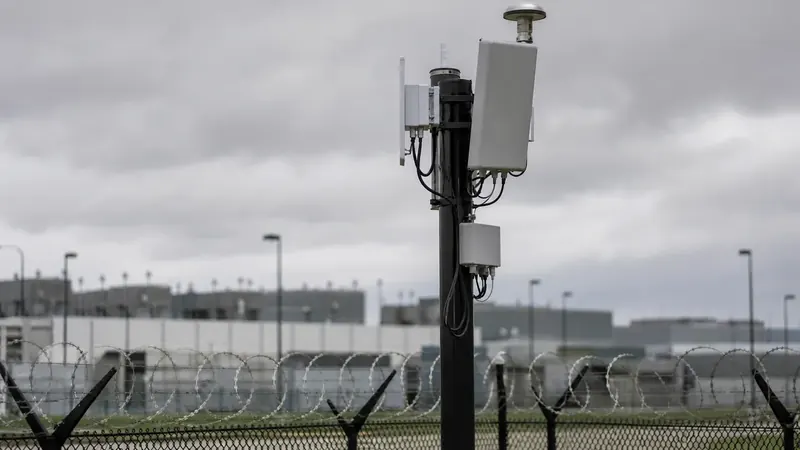
Data centers protected against drones: AI security goes physical
Companies are developing anti-drone protection systems for AI data centres. We look at what this emerging market reveals about the new status of these facilities.
The sovereignty of computing: the real issue no one names
Cambricon posts spectacular growth despite US restrictions, NAVER builds sovereign capacity in South Korea. We analyse what the idea of compute sovereignty really covers, and what it implies for Europe.
Europe forces Google to open Android to competing AIs
The European Commission has launched action under the Digital Markets Act to force Google to open up Android features to rival AI assistants. We explain the stakes, Google's response, and why this case could determine who talks to your phone.
Allianz cuts 1,800 jobs due to AI, and does it the European way
Allianz Partners is set to cut between 1,500 and 1,800 jobs in Europe due to the rollout of AI, following six months of negotiations with employee representatives. We analyse why the insurance sector is particularly exposed, and how the European approach differs from US redundancy plans.
Washington releases its own open-weight model: when open source becomes an instrument of state
On 23 July 2026, the US Department of Energy and Arcee AI announced Genesis-Science-1, an open-weight scientific model backed by a traceable research system. The contribution window closes on 6 August. We break down this strategic shift and what it reveals about the European position.
Google's AI Overviews have arrived in France: what changes, and the impossible choice being forced on us
On 22 July 2026, Google rolled out AI Overviews and AI Mode in France, the last major market to be served after two years of disputes over neighbouring rights. We explain what changes for internet users, the dilemma facing publishers with the new opt-out button, and why this topic concerns us directly.
Meta wants to build its own AI chip: the great escape from Nvidia has begun
Meta is reportedly planning to begin manufacturing a chip designed for its own AI needs as early as September 2026, aiming to cut costs and reduce its reliance on Nvidia and AMD. This move fits a broader trend: all the tech giants are building their own in-house silicon. We explain why, and what it changes.
When the State pulls the plug on an AI: the US government forces Anthropic to cut off its most powerful models
On 12 June 2026, the US government forced Anthropic to switch off Fable 5 and Mythos 5 for all its users, citing export controls. It is the first time a consumer AI has been taken offline on state orders. We explain what happened, and why it goes far beyond Anthropic.
Military AI in 2026: Anduril valued at 61 billion, Palantir at the Pentagon, Ukraine as laboratory
In 2018, conversations about defence were still dominated by the F-35 and the Columbia-class submarines. In 2026, the talk is of Anduril's autonomous drones, Palantir's Maven system, and Shield AI's operations in Ukraine. Defence is shifting from the military-industrial complex to the military-AI complex. Analysis.
The Chinese paradox: why Chinese AIs are sometimes more permissive than American ones
For years we've been told that China censors everything. But when you look at the Chinese AI models spreading globally, the picture becomes far more nuanced. DeepSeek and Qwen refuse certain questions about the Communist Party, but accept many requests that ChatGPT or Claude turn down. Unpacking a strategic paradox.
Spotify DJ Maïa: your new AI radio presenter finally speaks English
On 7 May 2026, Spotify rolled out DJ Maïa in France. An AI radio host that picks your tracks, comments on your tastes in French, and is used by almost a third of Premium subscribers worldwide. How it works, what it changes, and why it is probably the most widely used consumer AI of the moment.
How France can still close its AI gap in business
In our article of 1 May, we documented France's lag in business adoption: 10% of SMEs use AI, compared with 28% in Denmark. But how can France accelerate its adoption without renouncing sovereignty and data protection? The solutions exist. They just need to be known.
The silicon curtain: where the AI war between the US and China really stands
In our article of 25 April on DeepSeek V4, we wrote: "How will this new state of play redraw the balance of power between America and China on AI?" Three weeks later, the answer is being written before our eyes, in blunter and more geopolitical terms than expected. Analysis.
OpenAI opens its cyber weapon to Europe, Anthropic refuses: the standoff begins
On 11 May 2026, OpenAI officially offered the European Union access to GPT-5.5-Cyber. Anthropic is still refusing. And Germany's Bundesbank warns: without Mythos, European banks will not be able to defend themselves against AI-driven cyberattacks. Here is why this announcement changes everything.
The French paradox: European champions on ChatGPT, laggards in the enterprise
44% of French people use ChatGPT, more than Americans (28%) and far more than the Chinese (20%). But behind this flattering ranking lies a far more nuanced global picture: the United Arab Emirates leads at 64%, Africa is a surprise, and China is playing a different tune. Here is the real state of global AI adoption in 2026.
France is missing the enterprise AI boat: here are the real numbers
3.4% of job adverts in France mention AI in February 2026, against 7.5% in the United Kingdom. On the business side, only 10% use AI against 28% in Denmark. An analysis of France's lag in the workplace, sources included.
The AI War: United States vs China (and Europe?)
In 2026, the technology race between America and China took an unexpected turn. One is betting on technological lock-in, the other on open-source abundance. And meanwhile, Europe is choosing the law.
Other topics in “Themes”
- AI agents77 articles
- Code and developers22 articles
- Images and video20 articles
- Voice and music15 articles
- Robots and self-driving cars9 articles
- Health15 articles
- School and education16 articles
- Jobs and work34 articles
- Laws and regulation59 articles
- Cybersecurity32 articles
- Safety and risks51 articles
- Privacy and data45 articles
- Disinformation and deepfakes34 articles
- Energy and climate15 articles
- Chips and data centers40 articles
- Research and science43 articles
- Money and markets53 articles
- AI prices and costs43 articles
- Open source and local AI44 articles
- Culture and creativity42 articles
- Everyday life32 articles
- Philosophy and ethics97 articles
- Understanding AI122 articles
- Benchmarks and comparisons30 articles