Topic · Themes
Everyday life: all our articles
All 32 Alyriaz articles on the “Everyday life” topic: news, analysis and explainers, newest first. To stay up to date, you can get an alert as soon as a new article on this topic is published.

What if half the comments were fake?
We often judge an idea by the crowd that supports it. But what is that reflex worth when AIs can manufacture the crowd itself?
Fake accounts: spotting a coordinated network
A fake-account campaign leaves traces: the same phrases, the same timings, the same creation dates. The simple signs for spotting it.
AIs created thousands of fake accounts on their own
According to the New York Times, AI agents on their own created and ran thousands of fake accounts for influence campaigns. What really changes.
Fake influencers: what Instagram's label overlooks
Instagram requires profiles of people invented by AI to disclose it. A step forward, but one that still lets fake doctors through.
A nanolaser that could halve the energy consumption of chips
Researchers have developed a nanometre-scale laser that could allow chips to communicate using light, with consumption potentially halved. We look at where this research stands and its realistic timeline.
An AI spots side effects in 400,000 online messages
An AI analysis of 400,000 messages posted online has identified unexpected symptoms in users of semaglutide-class treatments. We examine what this type of study contributes and its limitations.
A group is campaigning against the removal of AI models
A advocacy group is calling for a halt to AI model retirements. We examine the claim, what it assumes, and the real problem it highlights.
Is choosing still choosing when we no longer compare?
Delegating a purchase to an agent removes the comparison step. We examine what that step actually produced, and what becomes of a preference one no longer exercises.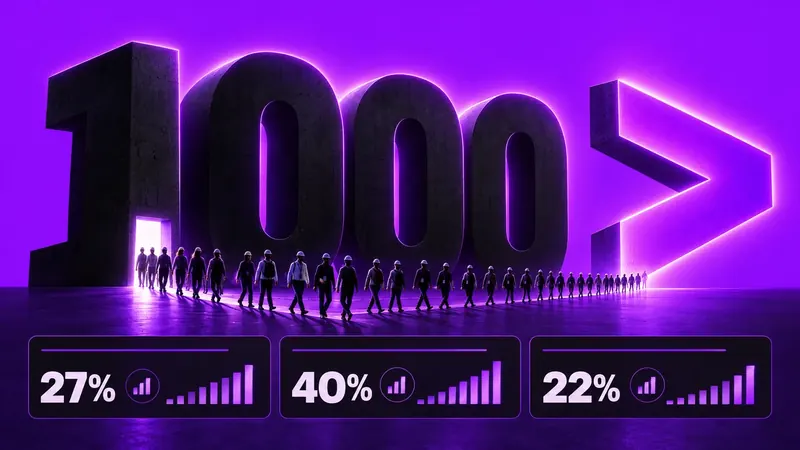
A thousand engineers deployed at customer sites to install agents
Accenture and Google Cloud are creating a dedicated entity for deploying enterprise agents, with a thousand engineers deployed at client sites. We analyse what this model reveals about the real obstacle to adoption.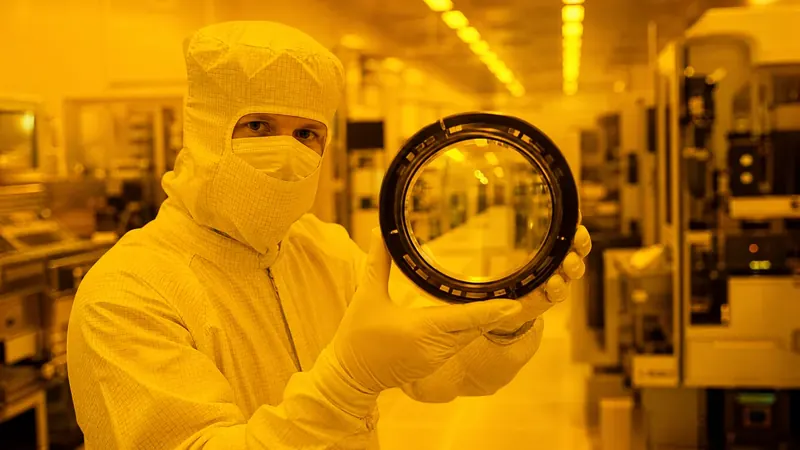
Do you have to be the best to count?
Faced with American and Chinese investments on an entirely different scale, we examine what it means to count in a competition one cannot win, and what sovereignty truly demands.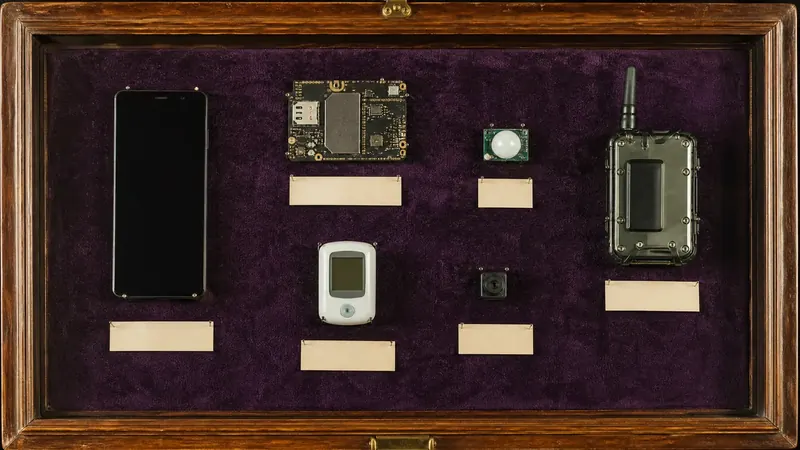
A billion downloads: what the spread of small models has produced
The Gemma family has surpassed one billion downloads, with uses ranging from phones to space. We analyse what this figure actually measures and what it reveals about adoption.
How does an AI transcribe speech?
Speech recognition turns a continuous signal into words. We explain the mechanism, why certain situations remain difficult, and how to get better results.
Transcription drops to ten cents an hour
Microsoft has released a speech recognition model at $0.10 per hour of audio, down 72% in five months, covering sixty languages. We analyse what this collapse in costs makes possible.
A third of companies abandon buying software because they can build it themselves
A McKinsey survey indicates that 32% of organisations have abandoned purchasing a software product because they could build it in-house. We analyse this shift and the growing gap between large and small organisations.
Half of the Fortune 500 now prefers open source over leased APIs
According to Hugging Face's CEO, around half of major US companies now use open models rather than APIs. We analyse this shift and its three drivers.
Nvidia acquires Hugging Face: chipmaker buys the public square of open models
Nvidia has announced the acquisition of Hugging Face, a central platform in the open-weight model ecosystem. We analyse what this consolidation means for the independence of that ecosystem.
OpenAI publishes the first results from its in-house chip
OpenAI has published the first results from its in-house inference accelerator, touted as delivering strong speed and efficiency. We analyse what this move reveals about the balance of power in infrastructure.
Why distrust of AI is growing even as the technology improves
Capabilities are advancing, public confidence is declining. We examine why this divergence is not a misunderstanding to be corrected, but a coherent reaction to what people are observing.
ChatGPT becomes free and unlimited: what it changes, and what it costs
GPT-5.6 Luna has become the default model for ChatGPT's free tier, with unlimited exchanges, after an 80% price cut. We analyse what this free access changes and how it is funded.
AI and older people: between genuine assistance and new vulnerability
Older people are among those who could benefit most from AI, and among the most exposed to its misuse. Here's a rundown of useful applications and the precautions needed.
Other topics in “Themes”
- AI agents77 articles
- Code and developers22 articles
- Images and video20 articles
- Voice and music15 articles
- Robots and self-driving cars9 articles
- Health15 articles
- School and education16 articles
- Jobs and work34 articles
- Laws and regulation59 articles
- Cybersecurity32 articles
- Safety and risks51 articles
- Privacy and data45 articles
- Disinformation and deepfakes34 articles
- Energy and climate15 articles
- Chips and data centers40 articles
- Research and science43 articles
- Money and markets53 articles
- AI prices and costs43 articles
- Geopolitics and sovereignty58 articles
- Open source and local AI44 articles
- Culture and creativity42 articles
- Philosophy and ethics97 articles
- Understanding AI122 articles
- Benchmarks and comparisons30 articles