Topic · Themes
School and education: all our articles
All 16 Alyriaz articles on the “School and education” topic: news, analysis and explainers, newest first. To stay up to date, you can get an alert as soon as a new article on this topic is published.

Learning a language with AI: the method that works
AI can become the conversation partner that everyone learning a language lacks. A five-step method, and its limits.
Will students' essays train AI?
Turnitin wanted to be able to use student papers for its AI tools. Cambridge refused at first, and the software backed down. What that tells us.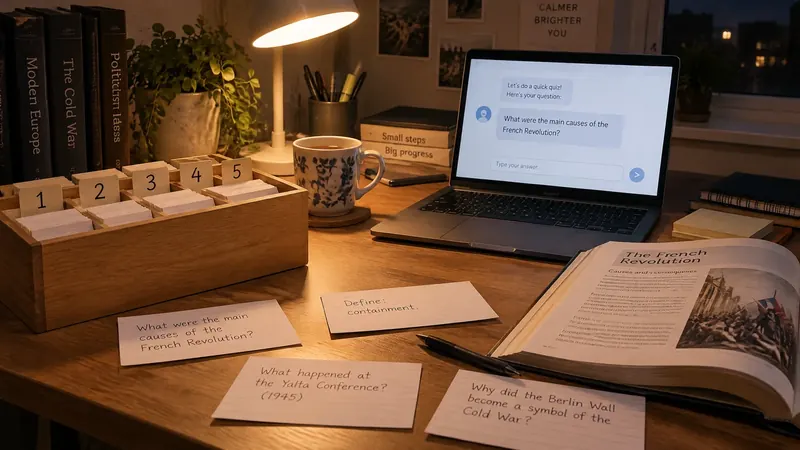
Revising with AI without getting caught out
An AI summary gives the impression of having understood, without retaining anything. Five ways to use an assistant to actually learn.
An AI text detector reported as bypassed: the race is lost, confirmed
A company claims to have developed a tool that neutralises the most accurate AI-text detectors. We look at why this race is structurally unwinnable and what that means.
Can you learn without a teacher?
AI can explain, rephrase, correct, and adapt to each person's level. We examine what a teacher does that it doesn't, and why that changes the nature of learning.
ChatGPT moves into American schools: what it means for teachers
OpenAI is expanding its offering for teachers to new US school districts. We look at what this tool can actually deliver, and the questions its deployment at this scale raises.
ChatGPT creates a dedicated experience for teens: good idea, real questions
OpenAI has rolled out an experience tailored to under-18s, with automatic age detection, enhanced protections, and learning tools. We analyse the real benefits and the questions raised by automatic age estimation.
If AI does the work, what is merit worth?
Merit rests on the idea that a result testifies to effort. When the tool removes the effort, the notion wavers. We explore what becomes of evaluating people, at school as at work.
AI in schools: what works, what doesn't
Should AI be banned in schools or integrated? We move beyond this false debate by distinguishing between uses that build skills and those that bypass them, based on what the available data allows us to assert.
Should we teach our children about AI, or protect them from it?
Should children be exposed to AI early to prepare them, or shielded from it to protect their learning? We weigh the available data and draw out a principle that partly reconciles the two camps: sequencing matters more than prohibition.
A Fields Medal winner joins OpenAI the very month of his award: what it says about research
Jacob Tsimerman has received the 2026 Fields Medal and announced on the same day that he would join OpenAI's security division. We analyse what this signal reveals about the appeal of private labs, and about what public research stands to lose.
Does AI make us stupider? What the studies actually say
Several studies link heavy AI use to a decline in critical thinking, a phenomenon known as cognitive offloading. We examine what this research actually shows, its methodological limitations, and the most useful takeaway: learning without AI before turning to it appears to be protective.
Is AI changing children's brains? What the first studies reveal
The first rigorous scientific studies on the cognitive effects of AI in children are starting to arrive. And they do not make for reassuring reading. Reduced brain connectivity, the accumulation of a "cognitive debt", lower attentional engagement: this is what neuroscience is actually measuring, without alarmism or downplaying.
What are we passing on to our children when AI already knows everything?
For the first time in human history, parents are passing on to their children skills that a machine already performs better than they do. Reading, writing, arithmetic, memorising: the machine wins. So what? Few people dare to ask this question directly. And yet it is probably the most important one of our age.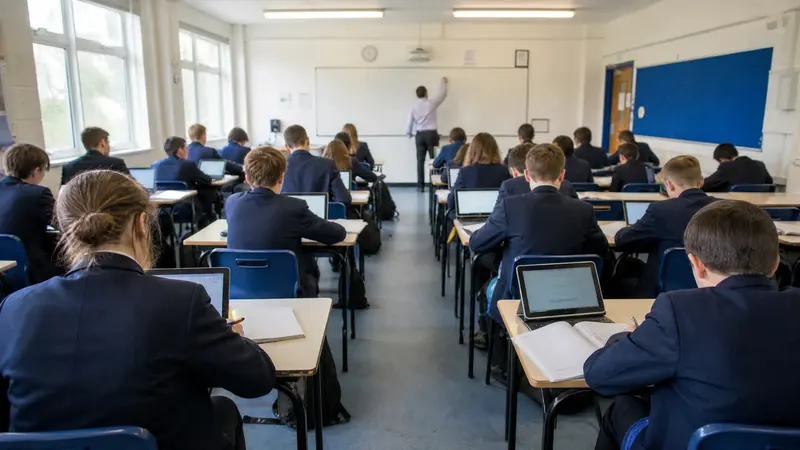
AI in education: 86% of pupils use it, 65% of teachers know nothing about it
While people debate whether ChatGPT should be banned in schools, students are already using it en masse. 92% of students worldwide in 2025. 88% for assessments. And many teachers have worked it out: it is not the enemy. It is the tool that saves them 6 hours a week. A closer look at the transformation under way.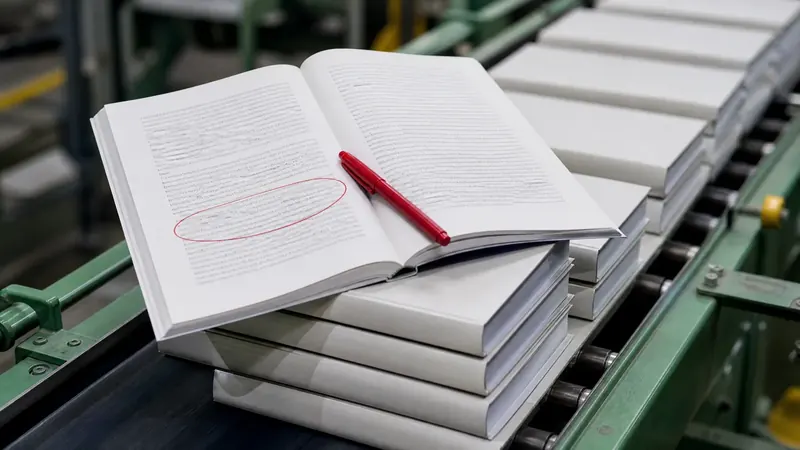
Are your school textbooks written by ChatGPT? The scandal that is blowing the lid off
A computing textbook printed in 2026 contains, in black and white, a sentence typical of ChatGPT left in the text by mistake: "If you want, I can also explain columns, primary keys, or other DBMS terms". The image goes viral on Instagram. At UCLA, a professor publishes a medieval literature textbook entirely generated by AI and publicly defends her choice. Here is what these cases really reveal.
Other topics in “Themes”
- AI agents77 articles
- Code and developers22 articles
- Images and video20 articles
- Voice and music15 articles
- Robots and self-driving cars9 articles
- Health15 articles
- Jobs and work34 articles
- Laws and regulation59 articles
- Cybersecurity32 articles
- Safety and risks51 articles
- Privacy and data45 articles
- Disinformation and deepfakes34 articles
- Energy and climate15 articles
- Chips and data centers40 articles
- Research and science43 articles
- Money and markets53 articles
- AI prices and costs43 articles
- Geopolitics and sovereignty58 articles
- Open source and local AI44 articles
- Culture and creativity42 articles
- Everyday life32 articles
- Philosophy and ethics97 articles
- Understanding AI122 articles
- Benchmarks and comparisons30 articles