Topic · Themes
Geopolitics and sovereignty: all our articles
All 58 Alyriaz articles on the “Geopolitics and sovereignty” topic: news, analysis and explainers, newest first. To stay up to date, you can get an alert as soon as a new article on this topic is published.

Is the race a good metaphor?
The race metaphor dominates political discourse on AI. We examine what it presupposes, what it makes unthinkable, and what might replace it.
The Pentagon is considering lending five billion to a computing startup
According to the Wall Street Journal, the Pentagon is reportedly discussing a loan of around $5 billion to a young computing company to shore up the American data centre supply chain. We analyse this shift in role.
Can a model's intelligence be stolen?
Model extraction involves reconstructing a system's capabilities by querying it at scale. We explain the mechanism, the possible defences, and why none of them really works.
Washington accuses Chinese labs of siphoning intelligence from American models
US agencies accuse Chinese labs of extracting the capabilities of American models at scale. We explain the technique in question and why it is hard to prevent.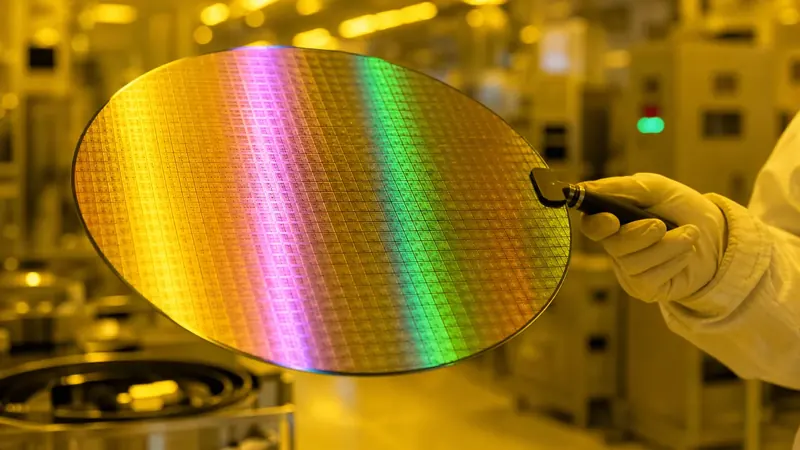
China prepares a 100,000-accelerator cluster on domestic silicon
China is reportedly preparing a cluster of 100,000 accelerators built on domestic silicon. We analyse what that figure confirms and what it leaves open.
Google tells 450 million Europeans that search is getting worse because of regulation
Google has informed European users that some search features would be degraded due to regulatory obligations. We analyse the argument, its share of truth, and the tactic.
A computer worm designed by a small team with the help of models
Researchers have shown that self-propagating malware could be designed by a small team assisted by models. We analyse what this change in scale implies, without technical detail.
Do you have to be the best to count?
Faced with American and Chinese investments on an entirely different scale, we examine what it means to count in a competition one cannot win, and what sovereignty truly demands.
China aims to quadruple its computing power by 2030
China's Ministry of Industry has unveiled a plan targeting 9,800 exaflops of computing capacity by 2030, with 3.8 trillion yuan in investment. We break down the figures and what they imply.
Mistral raises €3 billion, the largest European tech funding round
Mistral has announced a €3 billion funding round valuing the company at over €21 billion, billed as the largest ever raised by a European tech firm. We look at what this changes and what it doesn't.
An Arabic model with 428 billion parameters, built on Chinese weights
A Saudi lab has released a 428-billion-parameter model for Arabic, built on Chinese open weights. We analyse what this combination reveals about the new geography of AI.
California advances twenty-six bills on AI and social media
California has advanced twenty-six pieces of legislation on AI and social media. Here's why this state carries more weight than the federal level in actually regulating the sector.
Europe signs off its AI supercomputer in Finland, with chips that aren't Nvidia
The European Joint Undertaking for High Performance Computing has signed a €387.8 million contract for an AI supercomputer in Finland, equipped with AMD processors. We analyse what this choice means.
The Pentagon opens its AI portal to three million people, and one absence stands out
The US Department of Defense has opened a portal bringing together several AI assistants for three million personnel. We analyse this deployment and the absence of a major provider.
A fighter jet piloted entirely by AI: the debate moves beyond the military sphere
The US agency DARPA has conducted a test flight of an F-16 fully controlled by AI. We analyse what this trial means for the public debate on delegating decisions.
Europe eases its own AI rules: what the Digital Omnibus changes
The AI Digital Omnibus came into force on 27 July 2026, amending the timeline and certain obligations of the European regulation. We explain what changes and the two possible readings.
Has China caught up with America? The answer depends on what you look at
For three years, we've wondered whether China would catch up with the US in AI. The question no longer has a single answer: it depends on the modality. Here's a data-driven look at text, video, and image.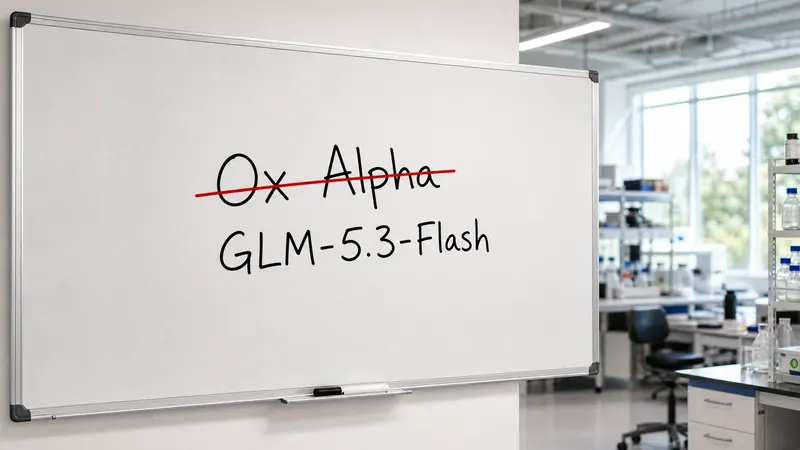
Ox Alpha revealed: it was GLM-5.3-Flash, and it runs entirely on Chinese chips
Z.ai confirmed on 26 August that the anonymous model Ox Alpha was GLM-5.3-Flash, released under the MIT licence with a one-million-token context. We analyse the reveal, the specs, and the point that goes far beyond the technical.
Europe now requires AIs to register
The transparency obligations of the European AI regulation have come into force. Conversational systems must disclose their nature, and generated content must be identifiable. We explain the real scope of these rules.
Washington would be asking countries to choose their technological camp
According to Reuters, the United States is reportedly considering asking dozens of countries to choose between the American and Chinese tech ecosystems. We analyse what this shift means, particularly for Europe.
Other topics in “Themes”
- AI agents77 articles
- Code and developers22 articles
- Images and video20 articles
- Voice and music15 articles
- Robots and self-driving cars9 articles
- Health15 articles
- School and education16 articles
- Jobs and work34 articles
- Laws and regulation59 articles
- Cybersecurity32 articles
- Safety and risks51 articles
- Privacy and data45 articles
- Disinformation and deepfakes34 articles
- Energy and climate15 articles
- Chips and data centers40 articles
- Research and science43 articles
- Money and markets53 articles
- AI prices and costs43 articles
- Open source and local AI44 articles
- Culture and creativity42 articles
- Everyday life32 articles
- Philosophy and ethics97 articles
- Understanding AI122 articles
- Benchmarks and comparisons30 articles