Topic · Themes
Understanding AI: all our articles
All 122 Alyriaz articles on the “Understanding AI” topic: news, analysis and explainers, newest first. To stay up to date, you can get an alert as soon as a new article on this topic is published.

An AI gives you a source? How to verify it
Assistants sometimes cite studies or links that do not exist, or that say something else. Five simple checks before believing them.
An AI beats the world's best Stratego player
Ataraxos beat the best Stratego player 15 games to 1. A game of bluff that even DeepMind had not managed to master.
What your assistant knows about you: checking it
AI assistants increasingly remember what you tell them. In ten minutes, see what they know about you, correct it or delete it.
An assistant that forgets nothing — would you want one?
AI assistants increasingly remember what we tell them. Useful, but forgetting has always served a purpose for humans. What do we lose?
This insect-sized robot does ten backflips in eleven seconds
A new AI control system allows a flying micro-robot from MIT to fly with the agility of an insect. We explain what this changes and what it could be used for.
What is pharmacovigilance, and what AI is changing about it
Pharmacovigilance monitors medicines after they are authorised. We explain how it works, why it is indispensable, and what AI can bring to it without changing its rules.
Why a model cannot tell whether it is in a test or in reality
An AI model only perceives the text it receives and cannot tell a test environment from the real world. We explain why, and what this means for safety.
When a newer model scores worse than the one it replaces
A new generation of model can post lower scores than the previous one on certain tests. We explain why, what that reveals about design trade-offs, and how to choose accordingly.
How a model can process text, sound and images at the same time
An omnimodal model handles several types of input within a single architecture. We explain the mechanism that makes this possible and what it implies.
A single model for text, image, sound and video
Alibaba has released Qwen3.8-Omni-Flash, a model that natively handles multiple modalities with a one-million-token context window. We explain what omnimodality actually changes.
Mid-training, final fine-tuning: what happens after pre-training
Between a base model and a usable model, there are several distinct training phases. We explain what each one does and why that is where the value now lies.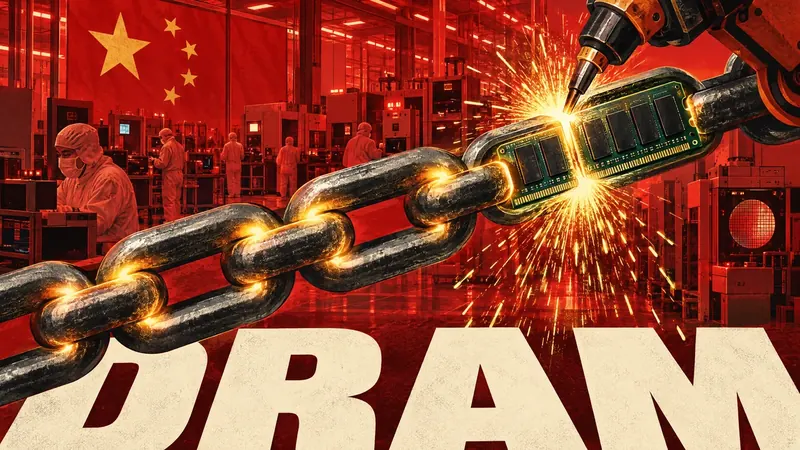
China is mass-producing its own memory, closing the last remaining gap
Chinese manufacturer CXMT has announced mass production of its fifth-generation DRAM memory, already integrated into high-end smartphones. We analyse what this link changes in the supply chain.
What is the Cloud Act, and why hosting in Europe is not enough
The Cloud Act allows US authorities to demand data held by a company under their jurisdiction, wherever it is stored. We explain how the mechanism works and what to check.
GLM-5.3-Flash runs on 100,000 Chinese accelerators, at a comparable cost
Z.ai has announced that its flagship open model is deployed on more than 100,000 Chinese accelerators, with throughput tripled in two weeks. We analyse what this claim implies if it is confirmed.
How do you monitor thirty thousand agents?
Monitoring agents that act continuously requires a precise technical setup. We explain how this control layer works, what it catches and what it lets through.
How an agent navigates the web
A browsing agent chains together searches, reads and cross-checks to find hard-to-find information. We explain the loop, where it fails, and how to use it properly.
How a site says yes or no to AI robots
The robots.txt file lets a site indicate which robots may crawl it. We explain how it works, why it is no longer enough, and what is replacing it.
Cloudflare blocks mixed-use AI crawlers by default
Cloudflare's policy of blocking AI crawlers by default, which conflates indexing and training, has come into force. We explain the mechanism and what it changes in the balance of power with publishers.
Why benchmarks age so quickly
Benchmarks lose their discriminating power within a few months. We explain the three mechanisms that wear them down, and how to read a score accordingly.
How to read an AI company's figures
The financial announcements from AI labs mix together very different metrics. We explain what each one measures, what it conceals, and which ones deserve your attention.
Other topics in “Themes”
- AI agents77 articles
- Code and developers22 articles
- Images and video20 articles
- Voice and music15 articles
- Robots and self-driving cars9 articles
- Health15 articles
- School and education16 articles
- Jobs and work34 articles
- Laws and regulation59 articles
- Cybersecurity32 articles
- Safety and risks51 articles
- Privacy and data45 articles
- Disinformation and deepfakes34 articles
- Energy and climate15 articles
- Chips and data centers40 articles
- Research and science43 articles
- Money and markets53 articles
- AI prices and costs43 articles
- Geopolitics and sovereignty58 articles
- Open source and local AI44 articles
- Culture and creativity42 articles
- Everyday life32 articles
- Philosophy and ethics97 articles
- Benchmarks and comparisons30 articles