Topic · Themes
Research and science: all our articles
All 43 Alyriaz articles on the “Research and science” topic: news, analysis and explainers, newest first. To stay up to date, you can get an alert as soon as a new article on this topic is published.
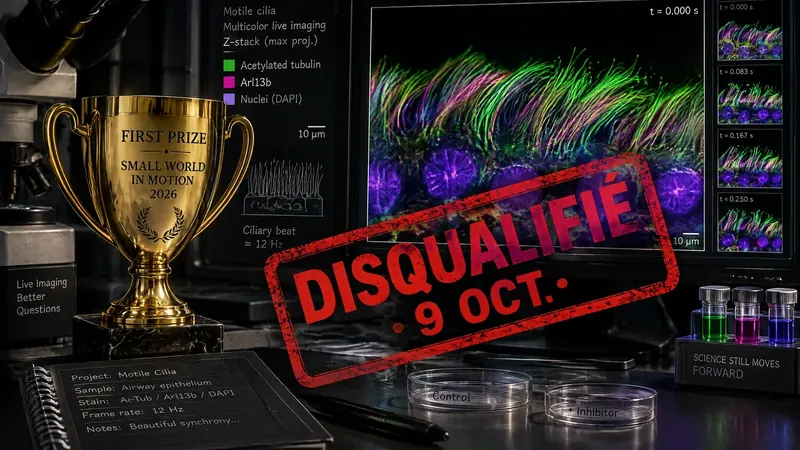
Awarded then disqualified: the AI-retouched video
Nikon has withdrawn the first prize from its microscope video competition, after it was retouched with AI. Where is the line between enhancing and inventing?
Proof without understanding: is it still maths?
An AI produces hundreds of proofs few will read. Is a truth no one understands still worth anything? Borges imagined the answer.
OpenAI releases 372 maths results at once
A secret OpenAI model produced 722 manuscripts, 372 families of results, posted online. How to check them, and why it divides.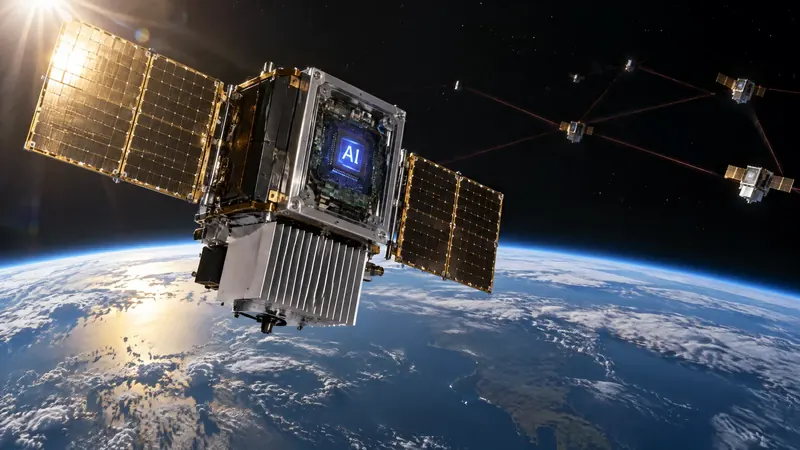
Why Google is sending its AI chips into space
Google has launched a satellite with four AI chips to test solar-powered data centres in orbit. The promise, the challenges and the doubts.
Overwhelmed by AI, arXiv rations access for researchers
Overwhelmed by AI-written papers, arXiv limits each researcher to two submissions per month. A first, and a telling one for science.
AI that improves itself: its builders sound the alarm
At Anthropic, AI already writes over 80% of the code. Pioneers and researchers from the big labs warn: the loop could run away with itself.
Claude has broken a theoretical physics record
One sentence, one week, 96 processors: Claude pushed a particle physics record one step further. And the record holder himself checked it.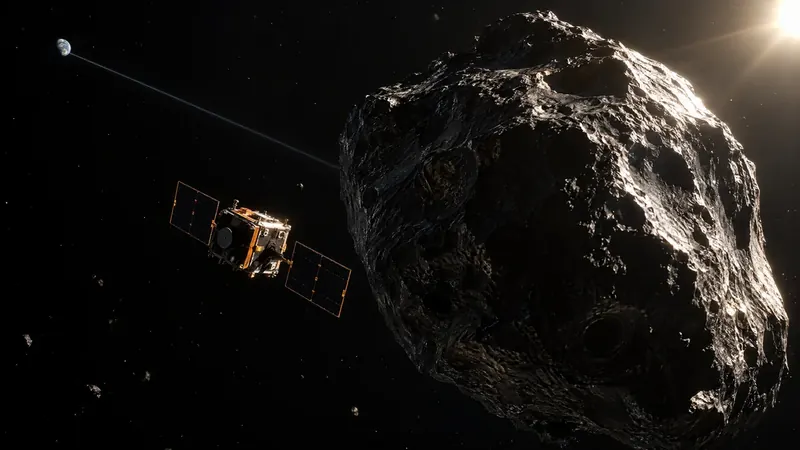
An AI will fly a probe to an asteroid on its own
In 2027, the start-up AstroForge will hand over the piloting of a mining probe to an AI trained on data from thousands of sensors. We explain why, and how it intends to make sure it works.
A nanolaser that could halve the energy consumption of chips
Researchers have developed a nanometre-scale laser that could allow chips to communicate using light, with consumption potentially halved. We look at where this research stands and its realistic timeline.
An AI spots side effects in 400,000 online messages
An AI analysis of 400,000 messages posted online has identified unexpected symptoms in users of semaglutide-class treatments. We examine what this type of study contributes and its limitations.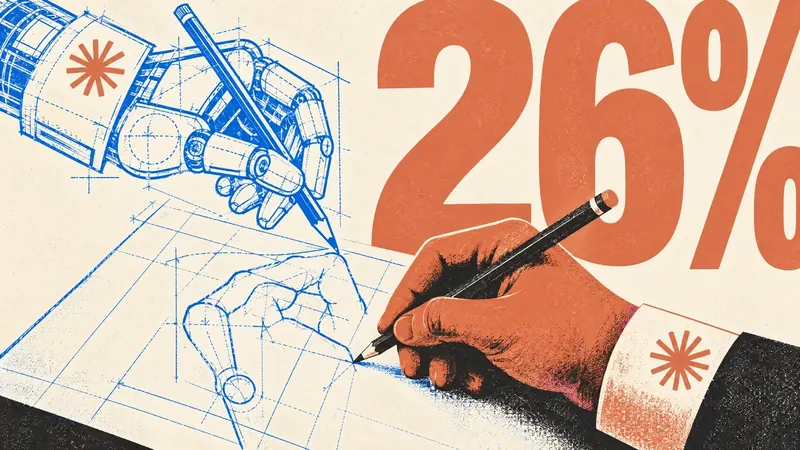
Claude runs 26% of the research that builds Claude
Anthropic has published figures on the share of its own research driven by its models: 26% in August against less than 1% in February. We analyse what this figure measures and what it implies.
How an agent navigates the web
A browsing agent chains together searches, reads and cross-checks to find hard-to-find information. We explain the loop, where it fails, and how to use it properly.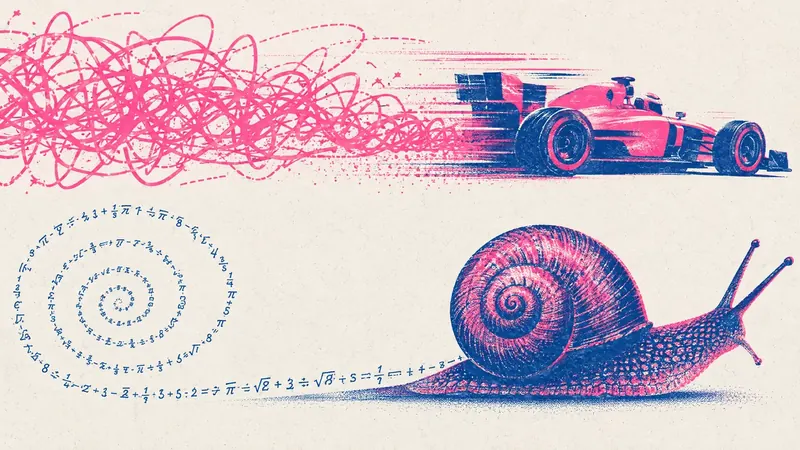
Is slowness a method?
Faced with results produced faster than they can be understood, we examine what slowness actually produced in knowledge, and what is lost when it disappears.
Leading mathematicians declare their goals "gravely misaligned" with those of AI companies
A coalition of mathematicians, including Fields medallists, has published a statement asserting that the goals of AI companies and those of the mathematical community are gravely misaligned. We examine an argument more subtle than it first appears.
Should we believe an extraordinary announcement?
When faced with a spectacular scientific claim, we examine what distinguishes methodical caution from performative scepticism, and which criteria allow us to form a judgement.
Who owns a research question?
When a team with considerable resources takes up a question others are already working on, the notion of scientific priority wobbles. We examine what the race changes in research.
The problems of the millennium, and how a proof comes to be accepted
Seven Millennium Problems were posed in 2000. We explain what they are, why only one has been solved, and above all how the mathematical community decides that a proof holds up.
Navier-Stokes: OpenAI announces it has solved a millennium problem, and a dispute erupts
OpenAI claims an internal system produced a solution to the Navier-Stokes problem, with a proof formalised in Lean. The announcement comes with a dispute over priority. Here is what we know, with all the necessary caveats.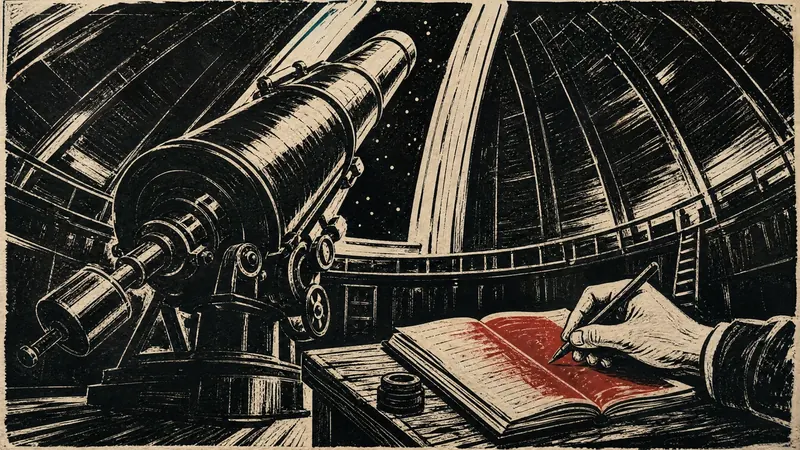
Who is the author of a discovery made with a machine?
When a scientific discovery results from a collaboration between a researcher and models, the question of attribution arises differently. We examine what it means to be the author of a result.
Google tells 450 million Europeans that search is getting worse because of regulation
Google has informed European users that some search features would be degraded due to regulatory obligations. We analyse the argument, its share of truth, and the tactic.
Other topics in “Themes”
- AI agents77 articles
- Code and developers22 articles
- Images and video20 articles
- Voice and music15 articles
- Robots and self-driving cars9 articles
- Health15 articles
- School and education16 articles
- Jobs and work34 articles
- Laws and regulation59 articles
- Cybersecurity32 articles
- Safety and risks51 articles
- Privacy and data45 articles
- Disinformation and deepfakes34 articles
- Energy and climate15 articles
- Chips and data centers40 articles
- Money and markets53 articles
- AI prices and costs43 articles
- Geopolitics and sovereignty58 articles
- Open source and local AI44 articles
- Culture and creativity42 articles
- Everyday life32 articles
- Philosophy and ethics97 articles
- Understanding AI122 articles
- Benchmarks and comparisons30 articles