Topic · Themes
Chips and data centers: all our articles
All 40 Alyriaz articles on the “Chips and data centers” topic: news, analysis and explainers, newest first. To stay up to date, you can get an alert as soon as a new article on this topic is published.
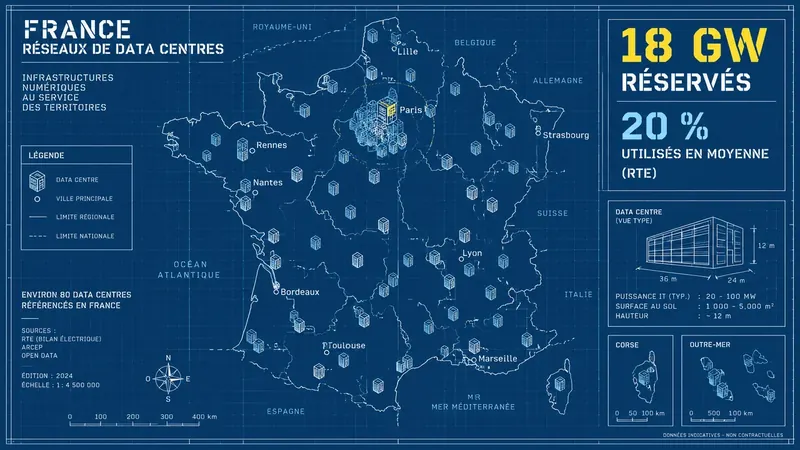
Data centres in France: the misleading figure
18 gigawatts reserved for data centres in France, three times more than in 2024. But that figure doesn't say what you think it does. The key things to know.
Can one person's progress make others poorer?
The AI race is making phones disappear for the poorest, without anyone intending it. How progress produces invisible losers.
AI is wiping out the 100-dollar smartphone
Memory chips are going to AI. Sales of sub-100-dollar phones fell nearly 60%, and the poorest are paying the price.
Why Google is sending its AI chips into space
Google has launched a satellite with four AI chips to test solar-powered data centres in orbit. The promise, the challenges and the doubts.
A nanolaser that could halve the energy consumption of chips
Researchers have developed a nanometre-scale laser that could allow chips to communicate using light, with consumption potentially halved. We look at where this research stands and its realistic timeline.
The county with 250 data centres: funded schools, and a growing anger
Loudoun County, Virginia, is home to around 250 data centres. Their tax revenues have funded schools and lowered taxes, while residents' anger is growing. We examine a case that complicates both narratives.
Twenty-eight billion in spending in a single quarter, financed by debt
Oracle has posted a quarter with $28.5 billion in capital expenditure, more than triple last year's figure, and interest expenses up 55%. We analyse what these figures reveal about the financing of infrastructure.
India bets 13.5 billion on its semiconductors
India has announced a second phase of its semiconductor programme, worth $13.5 billion over twelve years, with commitments from foreign equipment makers. We analyse this strategy.
China is mass-producing its own memory, closing the last remaining gap
Chinese manufacturer CXMT has announced mass production of its fifth-generation DRAM memory, already integrated into high-end smartphones. We analyse what this link changes in the supply chain.
Data centres to pay for their grid connections: a vote of 417 to 3
A text passed almost unanimously requires large data-centre consumers to pay for the grid upgrades they cause, rather than passing them on to household bills. We analyse what it means.
517 billion compute commitments, and tighter quotas the same week
Anthropic disclosed around $517 billion in compute commitments in the week it tightened usage limits on its coding tool. We look at what those two facts say together.
Cloudflare blocks mixed-use AI crawlers by default
Cloudflare's policy of blocking AI crawlers by default, which conflates indexing and training, has come into force. We explain the mechanism and what it changes in the balance of power with publishers.
The Pentagon is considering lending five billion to a computing startup
According to the Wall Street Journal, the Pentagon is reportedly discussing a loan of around $5 billion to a young computing company to shore up the American data centre supply chain. We analyse this shift in role.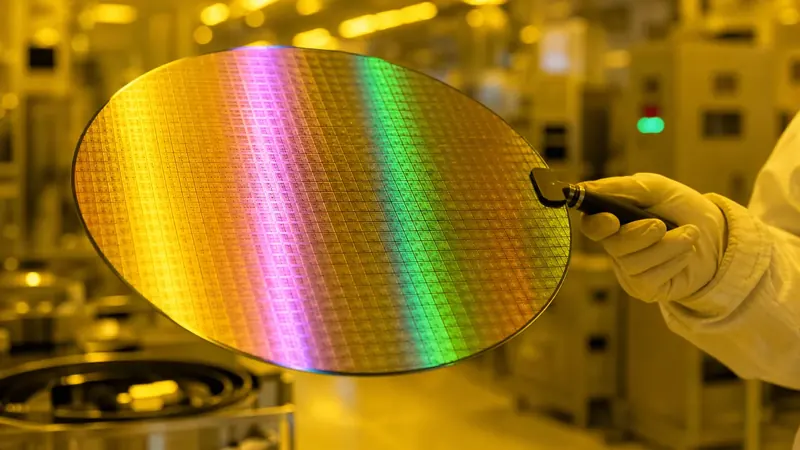
China prepares a 100,000-accelerator cluster on domestic silicon
China is reportedly preparing a cluster of 100,000 accelerators built on domestic silicon. We analyse what that figure confirms and what it leaves open.
Google locks down nuclear power in Finland for its data centres
Google secures nuclear capacity in Finland to power its data centres. We analyse what this kind of deal changes, for better and for worse, for the collective energy trajectory.
Qualcomm and Amazon team up on inference chips
Qualcomm and AWS have announced a collaboration to jointly design chips dedicated to inference. We analyse what this tie-up reveals about the reshaping of the silicon market.
What is an exaflop? Measuring computing power, and why comparisons mislead
Computing power announcements are multiplying in exaflops. We explain this unit, why the same hardware can show very different figures, and how to read these announcements.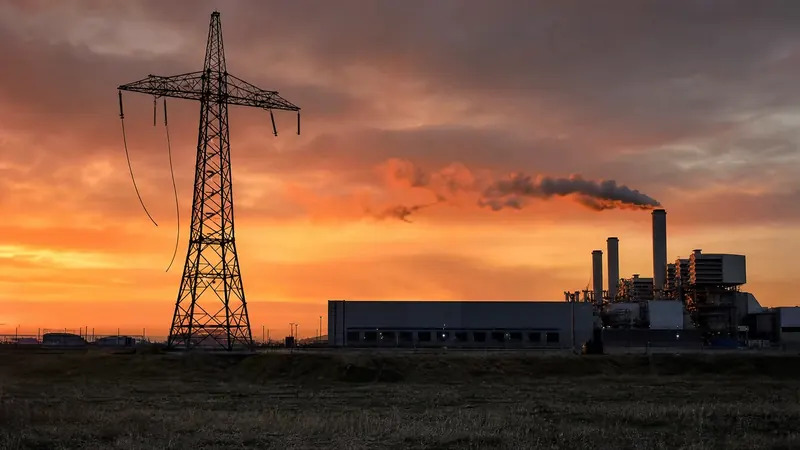
Data centers are leaving the power grid
Faced with grid connection constraints and local opposition, data centers are investing heavily in their own electricity generation. We analyse this shift and its environmental and democratic consequences.
China aims to quadruple its computing power by 2030
China's Ministry of Industry has unveiled a plan targeting 9,800 exaflops of computing capacity by 2030, with 3.8 trillion yuan in investment. We break down the figures and what they imply.
Running AI on the machines that sleep at home
Nvidia has introduced a local clustering tool that lets you use idle Macs and PCs to run models. We explain how it works, its limitations, and why it arrives at the right time.
Other topics in “Themes”
- AI agents77 articles
- Code and developers22 articles
- Images and video20 articles
- Voice and music15 articles
- Robots and self-driving cars9 articles
- Health15 articles
- School and education16 articles
- Jobs and work34 articles
- Laws and regulation59 articles
- Cybersecurity32 articles
- Safety and risks51 articles
- Privacy and data45 articles
- Disinformation and deepfakes34 articles
- Energy and climate15 articles
- Research and science43 articles
- Money and markets53 articles
- AI prices and costs43 articles
- Geopolitics and sovereignty58 articles
- Open source and local AI44 articles
- Culture and creativity42 articles
- Everyday life32 articles
- Philosophy and ethics97 articles
- Understanding AI122 articles
- Benchmarks and comparisons30 articles