Topic · Themes
Jobs and work: all our articles
All 34 Alyriaz articles on the “Jobs and work” topic: news, analysis and explainers, newest first. To stay up to date, you can get an alert as soon as a new article on this topic is published.
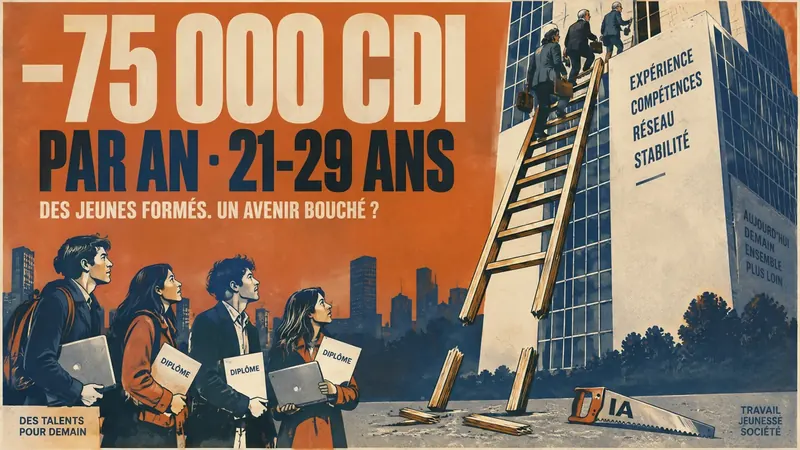
AI: 75,000 fewer permanent jobs a year for young people
According to the Banque de France and HEC, permanent-contract hires among 21-29 year-olds have fallen by 28% in roles exposed to AI. Newcomers to the job market are paying the price first.
Deutsche Telekom aims to save 2.5 billion with AI
Deutsche Telekom aims to save 2.5 billion euros through AI by 2030. Hotline, network, call translation, and two figures missing.
Job interview with an AI: how to prepare for it
An AI that conducts job interviews has already questioned 500,000 candidates. How it works, how to prepare for it, and your rights in Europe.
Accenture: AI was supposed to ruin it, it's making it soar
Accenture was supposed to be a victim of AI. Its results sent its shares up as much as 22%: companies need help adopting it.
How much is one person worth?
A company loses nearly 20% on the stock market because its boss is leaving. In the age of automation, what is one person still worth?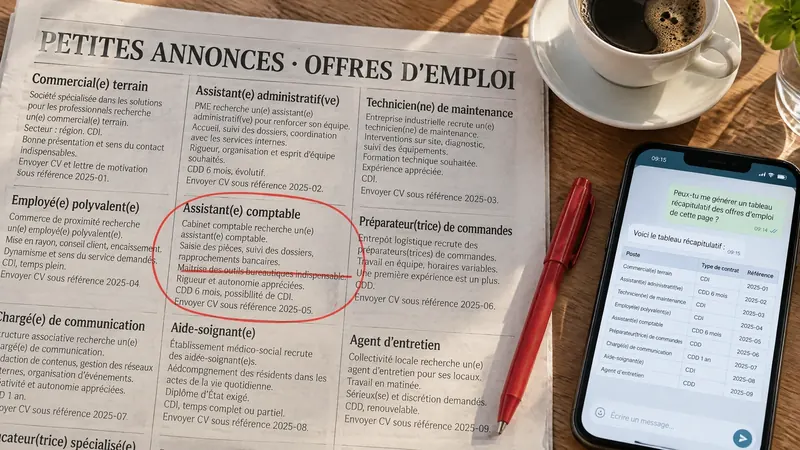
Employers are increasingly less likely to require a computer science degree
According to the Paris School of Economics, office job adverts requiring IT skills have fallen by around 40%. The jobs themselves remain.
Everything will get cheaper. Even your job?
AI makes a lot of things cheaper, including human labour. Good news when you're buying, bad news when you're selling. Who comes out ahead in the exchange?
In 2017, researchers predicted what AI would be able to do. We checked.
In 2017, machine-learning researchers gave dates for what AI would be able to do. We compare their predictions with the reality of 2026.
What does it mean to create, when everything already exists?
Is building on the work of others creating? We examine this question through the economic shift currently under way, and through what the history of art and technology has to say about it.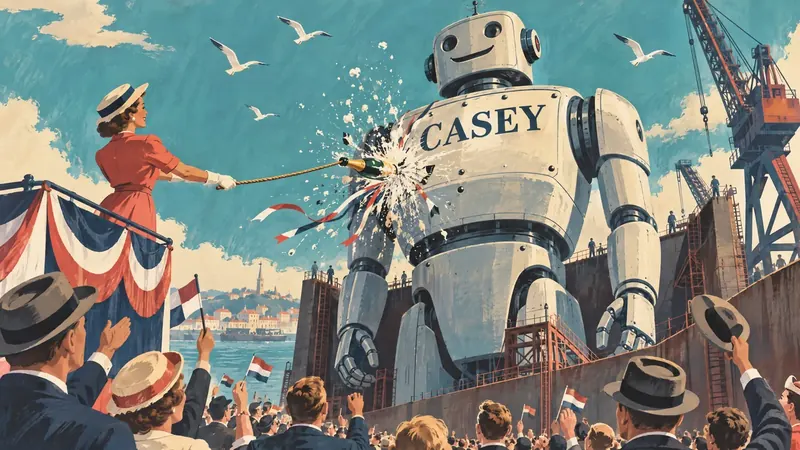
Should machines be given names?
Naming an object is an old and innocuous gesture. We examine why it ceases to be so when the object speaks, and what a first name changes in the working relationship.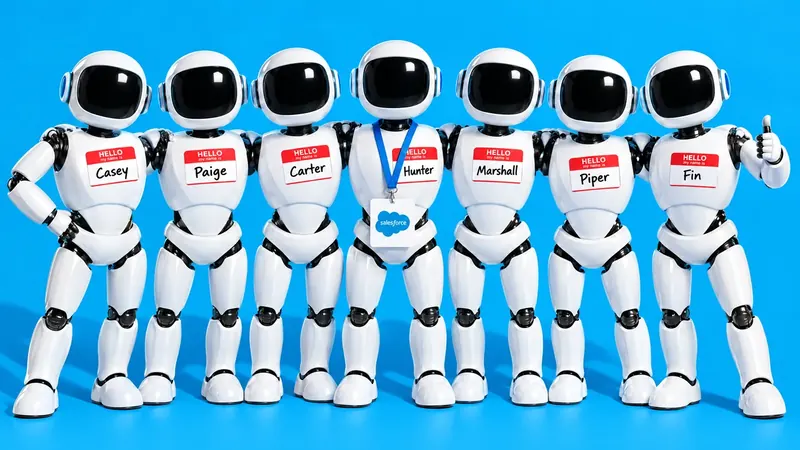
Salesforce gives its agents first names
Salesforce has launched seven agents with first names, one per business function. We analyse what this design decision implies for the way teams use them.
128,000 tech job cuts, and the year isn't over yet
More than 128,000 tech job cuts have been recorded since January 2026, exceeding the total for 2025. We analyse what these figures tell us, and above all what they do not allow us to conclude.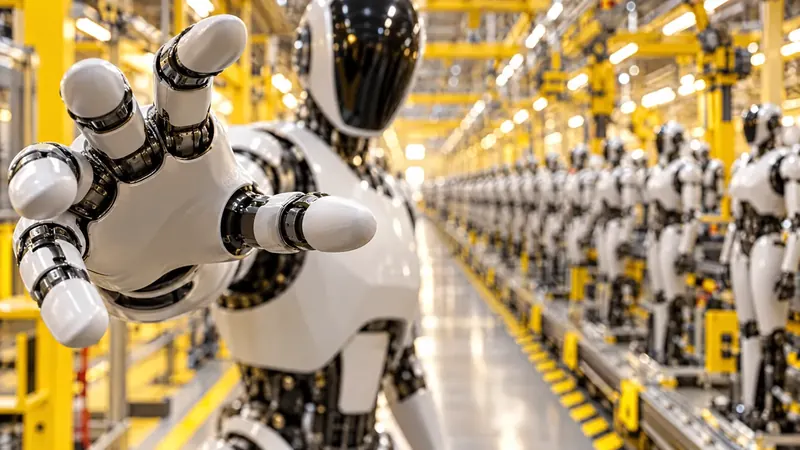
Humanoid robots roll off a production line
Humanoid robots have started rolling off a production line in China. We look at what the shift to mass production changes, and what remains very far from being solved.
What deserves to be automated?
Technical feasibility is no longer the limit. The question is what should decide what we automate, and why time saved is a misleading criterion.
What is progress?
The same week saw unprecedented capabilities and a lack of measurable gains. We examine what we call progress, why the two observations do not contradict each other, and against what it should be measured.
Bill Gates: "this transition is not like previous ones"
Bill Gates has published an essay on AI policy arguing that this transition differs from previous technological revolutions. We examine his argument and what can be said against it.
Amazon shuts down Mechanical Turk: the end of an era for invisible work
Amazon shuts down Mechanical Turk, the microtask marketplace launched in 2005. We analyse what this closure reveals about the evolution of human labour behind AI.
Three years of AI in the enterprise, and almost no measurable productivity gains
A survey by the US National Bureau of Economic Research reports that the vast majority of executives surveyed see no effect of AI on their productivity or on employment. We analyse this puzzling result.
What does a job well done mean?
The quality of a piece of work used to be judged by signs that implied care: form, structure, finish. These signs have become free. We explore what still allows us to judge, and what that changes for those who work.
UK trials AI to get young people back into work
The British government is trialling the use of AI to help more than a million young people who are not in education or employment into work. We analyse the real potential and the risks of this type of system.
Other topics in “Themes”
- AI agents77 articles
- Code and developers22 articles
- Images and video20 articles
- Voice and music15 articles
- Robots and self-driving cars9 articles
- Health15 articles
- School and education16 articles
- Laws and regulation59 articles
- Cybersecurity32 articles
- Safety and risks51 articles
- Privacy and data45 articles
- Disinformation and deepfakes34 articles
- Energy and climate15 articles
- Chips and data centers40 articles
- Research and science43 articles
- Money and markets53 articles
- AI prices and costs43 articles
- Geopolitics and sovereignty58 articles
- Open source and local AI44 articles
- Culture and creativity42 articles
- Everyday life32 articles
- Philosophy and ethics97 articles
- Understanding AI122 articles
- Benchmarks and comparisons30 articles