Topic · Companies and labs
Chinese AI: all our articles
All 47 Alyriaz articles about Chinese AI: announcements, products, strategy and analysis, newest first. To stay up to date, you can get an alert as soon as a new article on this topic is published.

Giving an identity to someone who does not exist?
Beijing grants papers to a virtual singer. Absurd? Our law already counts "persons" without bodies. What an identity really means.
In China, a virtual singer has her own ID card
In Beijing, Yuri, an AI-created singer, has been granted official papers allowing her to sign contracts. Why China is doing this.
Chinese robotaxis to hit London roads
Uber is to test Chinese firm Pony.ai's robotaxis in London, with a target of 2,000 driverless cars in Europe. What's coming, and what it raises.
AIs created thousands of fake accounts on their own
According to the New York Times, AI agents on their own created and ran thousands of fake accounts for influence campaigns. What really changes.
In China, the stock market now sees only AI
In China, AI-related stocks have doubled while consumer stocks hit a ten-year low. What that says about money and AI.
A red telephone for AI between Beijing and Washington
Beijing and Washington are to set up a channel to manage serious AI-related incidents. An idea born during the Cold War, and one that has proved its worth.
A single model for text, image, sound and video
Alibaba has released Qwen3.8-Omni-Flash, a model that natively handles multiple modalities with a one-million-token context window. We explain what omnimodality actually changes.
Six hundred billion parameters at a dollar per million tokens
StepFun has launched Step 5 Preview, a 600-billion-parameter model with a one-million-token context window, priced at 1 dollar for input. We put that rate into context within the current landscape.
A startup is valued at 1.4 billion and doesn't train any model from scratch
A young Chinese company reaches a $1.42 billion valuation in seven months by specialising open models rather than training them. We analyse this model and what it reveals.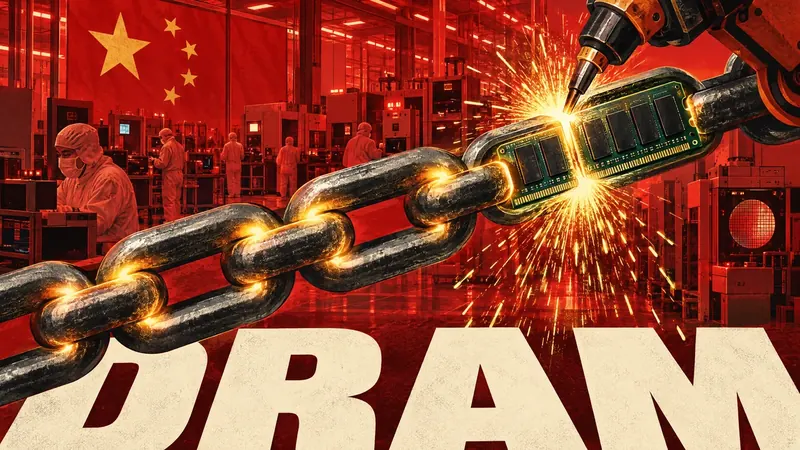
China is mass-producing its own memory, closing the last remaining gap
Chinese manufacturer CXMT has announced mass production of its fifth-generation DRAM memory, already integrated into high-end smartphones. We analyse what this link changes in the supply chain.
GLM-5.3-Flash runs on 100,000 Chinese accelerators, at a comparable cost
Z.ai has announced that its flagship open model is deployed on more than 100,000 Chinese accelerators, with throughput tripled in two weeks. We analyse what this claim implies if it is confirmed.
An open 744-billion-parameter agent beats the best closed model on web navigation
Shanghai AI Lab has quietly released a 744-billion-parameter agent that beats GPT-5.6 Sol on a web navigation benchmark. We look at what that result actually means.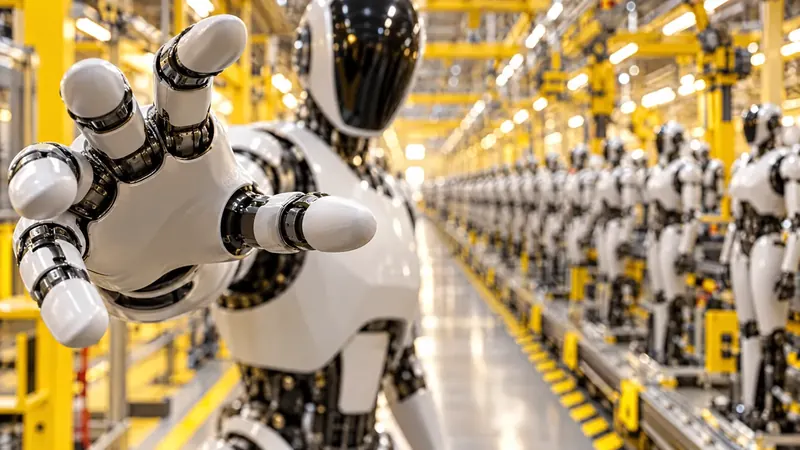
Humanoid robots roll off a production line
Humanoid robots have started rolling off a production line in China. We look at what the shift to mass production changes, and what remains very far from being solved.
Washington accuses Chinese labs of siphoning intelligence from American models
US agencies accuse Chinese labs of extracting the capabilities of American models at scale. We explain the technique in question and why it is hard to prevent.
China prepares a 100,000-accelerator cluster on domestic silicon
China is reportedly preparing a cluster of 100,000 accelerators built on domestic silicon. We analyse what that figure confirms and what it leaves open.
China aims to quadruple its computing power by 2030
China's Ministry of Industry has unveiled a plan targeting 9,800 exaflops of computing capacity by 2030, with 3.8 trillion yuan in investment. We break down the figures and what they imply.
An Arabic model with 428 billion parameters, built on Chinese weights
A Saudi lab has released a 428-billion-parameter model for Arabic, built on Chinese open weights. We analyse what this combination reveals about the new geography of AI.
Has China caught up with America? The answer depends on what you look at
For three years, we've wondered whether China would catch up with the US in AI. The question no longer has a single answer: it depends on the modality. Here's a data-driven look at text, video, and image.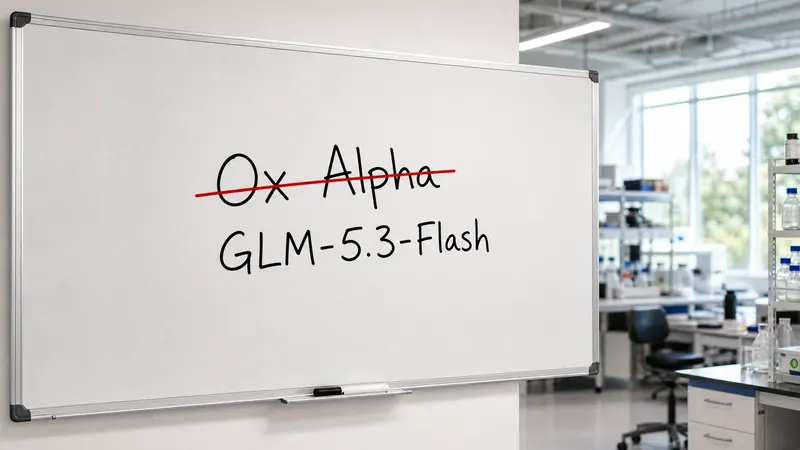
Ox Alpha revealed: it was GLM-5.3-Flash, and it runs entirely on Chinese chips
Z.ai confirmed on 26 August that the anonymous model Ox Alpha was GLM-5.3-Flash, released under the MIT licence with a one-million-token context. We analyse the reveal, the specs, and the point that goes far beyond the technical.
Wan 3.0: the video model that accepts a spreadsheet as input
On 24 August, Alibaba widened access to Wan 3.0, which can generate thirty seconds of sound video in a single pass and accept documents as input. It is being compared to leading models, and we revisit the unfulfilled promise of openness.
Other topics in “Companies and labs”
- OpenAI69 articles
- Anthropic67 articles
- Google42 articles
- Meta16 articles
- Microsoft11 articles
- Apple6 articles
- Nvidia14 articles
- Mistral AI4 articles
- xAI and Grok3 articles
All the other topics
- AI agents77 articles
- Code and developers22 articles
- Images and video20 articles
- Voice and music15 articles
- Robots and self-driving cars9 articles
- Health15 articles
- School and education16 articles
- Jobs and work34 articles
- Laws and regulation59 articles
- Cybersecurity32 articles
- Safety and risks51 articles
- Privacy and data45 articles
- Disinformation and deepfakes34 articles
- Energy and climate15 articles
- Chips and data centers40 articles
- Research and science43 articles
- Money and markets53 articles
- AI prices and costs43 articles
- Geopolitics and sovereignty58 articles
- Open source and local AI44 articles
- Culture and creativity42 articles
- Everyday life32 articles
- Philosophy and ethics97 articles
- Understanding AI122 articles
- Benchmarks and comparisons30 articles
- Tutorials and how-tos35 articles
- Weekly recaps11 articles