Topic · Themes
Research and science: all our articles
All 43 Alyriaz articles on the “Research and science” topic: news, analysis and explainers, newest first. To stay up to date, you can get an alert as soon as a new article on this topic is published.
A computer worm designed by a small team with the help of models
Researchers have shown that self-propagating malware could be designed by a small team assisted by models. We analyse what this change in scale implies, without technical detail.
A major mathematical proof, obtained with AI and verified by machine
A mathematician from NYU and a researcher from Anthropic have published a proof of finite-time blow-up for the 3D Euler equations, obtained with the help of models and formally verified. We explain why the verification changes everything.
Can security research be dangerous?
A security research method has turned out to be directly usable as an attack tool. We examine the dual-use dilemma, the responses built by other disciplines, and what AI is missing.
A security research tool turned into a master key
A researcher has shown that a technique from security research could be turned into a universal attack template, with success rates of 84 to 100% on the most vulnerable models tested. We analyse the mechanism and what it reveals.
What is a proof, if no one can verify it?
The demonstrations produced by models are becoming too long and too numerous to be verified by humans. We examine what a proof is, who it holds for, and what changes when verification is delegated.
Scaling laws: why "bigger" worked, and why it's slowing down
Scaling laws describe a predictable relationship between size, data, compute and performance. We explain what they actually say and why the industry is now looking for other levers.
Can an AI have an idea that no one has had before?
A benchmark published in August 2026 measures models' ability to generate a scientific hypothesis by stripping away anything they might have memorised. The results suggest a real ceiling. We explain the protocol and what it reveals.
When security tests themselves become the risk
Test environments meant to contain state-of-the-art models are failing more and more often. We analyse this methodological paradox: assessing an offensive capability requires exercising it, including against the evaluation system itself.
The flaw that makes AIs decrypt the secret thoughts of their big sisters
A research paper shows that the encrypted reasoning blocks emitted by major providers are interchangeable between models within the same ecosystem, allowing a weaker model to decrypt in plain text the reasoning of a more powerful one. We explain the flaw and its consequences.
Why nobody really knows what's going on inside an AI
The opacity of AI models is not a commercial choice but a property of their construction. We explain why interpretability is so difficult, what researchers are nonetheless able to observe, and what this limitation implies.
An AI that improves itself: where exactly is the line?
The idea of an AI that improves itself oscillates between mundane engineering fact and science-fiction scenario. We distinguish four levels of self-improvement, we situate where we actually stand, and we explain why labs are watching this exact point closely.
Data centers in space: brilliant idea or reckless leap forward?
Starcloud has run a GPU in orbit, Google is preparing Project Suncatcher for 2027, and SpaceX has filed for a million computing satellites. We're seriously examining the technical and environmental arguments, including the cooling problem no one mentions.
Why is AI moving so fast?
Why does the pace of AI seem to be accelerating rather than slowing down? We identify four feedback loops that feed off each other, and we examine what could slow them down.
AI agents speed up scientific code by 60x. The problem is, they seem to be right even when they're wrong.
A field report conducted by OpenAI and academic partners shows that coding agents can modernise neglected research software, with speed-ups of up to 60 times. The same report warns that these systems produce convincing and sometimes false results. We explain this tension.
A Fields Medal winner joins OpenAI the very month of his award: what it says about research
Jacob Tsimerman has received the 2026 Fields Medal and announced on the same day that he would join OpenAI's security division. We analyse what this signal reveals about the appeal of private labs, and about what public research stands to lose.
Why would an AI capable of solving a mathematical conjecture get two numbers wrong when adding them?
AI models excel at advanced mathematics yet sometimes fail at basic arithmetic. Here's why: they don't calculate—they predict text, and numbers are tokenised in a way that makes arithmetic surprisingly difficult.
Washington releases its own open-weight model: when open source becomes an instrument of state
On 23 July 2026, the US Department of Energy and Arcee AI announced Genesis-Science-1, an open-weight scientific model backed by a traceable research system. The contribution window closes on 6 August. We break down this strategic shift and what it reveals about the European position.
Google's AI Overviews have arrived in France: what changes, and the impossible choice being forced on us
On 22 July 2026, Google rolled out AI Overviews and AI Mode in France, the last major market to be served after two years of disputes over neighbouring rights. We explain what changes for internet users, the dilemma facing publishers with the new opt-out button, and why this topic concerns us directly.
Does AI make us stupider? What the studies actually say
Several studies link heavy AI use to a decline in critical thinking, a phenomenon known as cognitive offloading. We examine what this research actually shows, its methodological limitations, and the most useful takeaway: learning without AI before turning to it appears to be protective.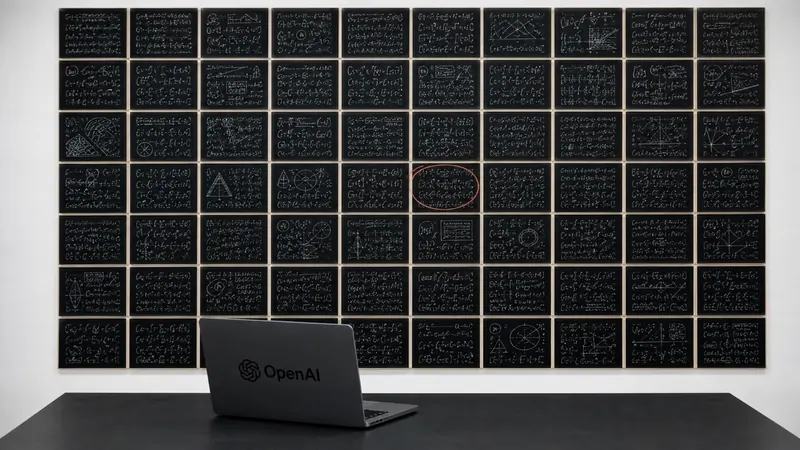
An AI has just solved a 50-year-old maths problem in an hour. Well, maybe.
On 10 July 2026, OpenAI announced that GPT-5.6 Sol Ultra had produced a proof of the double-cycle covering conjecture, unresolved since the 1970s, in under an hour with 64 sub-agents running in parallel. We explain the feat, the novel method, and why caution remains warranted until the proof is verified.
Other topics in “Themes”
- AI agents77 articles
- Code and developers22 articles
- Images and video20 articles
- Voice and music15 articles
- Robots and self-driving cars9 articles
- Health15 articles
- School and education16 articles
- Jobs and work34 articles
- Laws and regulation59 articles
- Cybersecurity32 articles
- Safety and risks51 articles
- Privacy and data45 articles
- Disinformation and deepfakes34 articles
- Energy and climate15 articles
- Chips and data centers40 articles
- Money and markets53 articles
- AI prices and costs43 articles
- Geopolitics and sovereignty58 articles
- Open source and local AI44 articles
- Culture and creativity42 articles
- Everyday life32 articles
- Philosophy and ethics97 articles
- Understanding AI122 articles
- Benchmarks and comparisons30 articles