Topic · Themes
Chips and data centers: all our articles
All 40 Alyriaz articles on the “Chips and data centers” topic: news, analysis and explainers, newest first. To stay up to date, you can get an alert as soon as a new article on this topic is published.
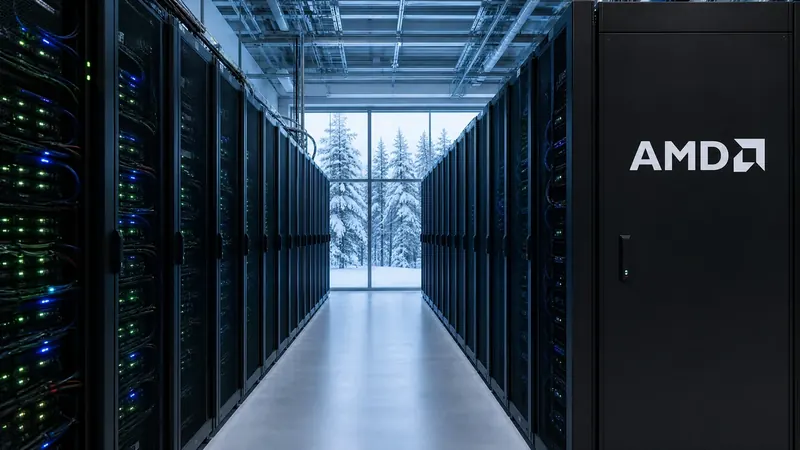
Europe signs off its AI supercomputer in Finland, with chips that aren't Nvidia
The European Joint Undertaking for High Performance Computing has signed a €387.8 million contract for an AI supercomputer in Finland, equipped with AMD processors. We analyse what this choice means.
Nvidia invests $3.5 billion in MediaTek to defend its position
Nvidia partners with MediaTek in a deal reported at $3.5 billion, as its key customers develop their own silicon. We analyse this defensive strategy.
OpenAI publishes the first results from its in-house chip
OpenAI has published the first results from its in-house inference accelerator, touted as delivering strong speed and efficiency. We analyse what this move reveals about the balance of power in infrastructure.
Nvidia is putting into production a chip that does only one thing: respond fast
Nvidia has announced that its inference accelerator, born from its acquisition of Groq, is entering production. Here’s why a chip specialised in responding rather than training is a significant signal.
SpaceX and Nvidia move from words to action: a computing system designed for orbit
SpaceX and Nvidia are said to have designed a space-grade version of the Vera Rubin NVL72 system, slated for an orbital launch by the end of the year. We look at what this move confirms and what it leaves unresolved.
Pennsylvania blocks data centers without local agreement: reality keeps pushing back
The governor of Pennsylvania has signed an executive order making local approval mandatory for the siting of AI data centres. We analyse what this move reveals about the physical and political limits of the infrastructure race.
Anthropic reports its first profit, two years ahead of its own schedule
Anthropic has announced for the second quarter of 2026 a revenue of $10.9 billion and its first operating profit, two years ahead of its forecasts. We analyse these figures, their caveats, and the infrastructure commitments that accompany them.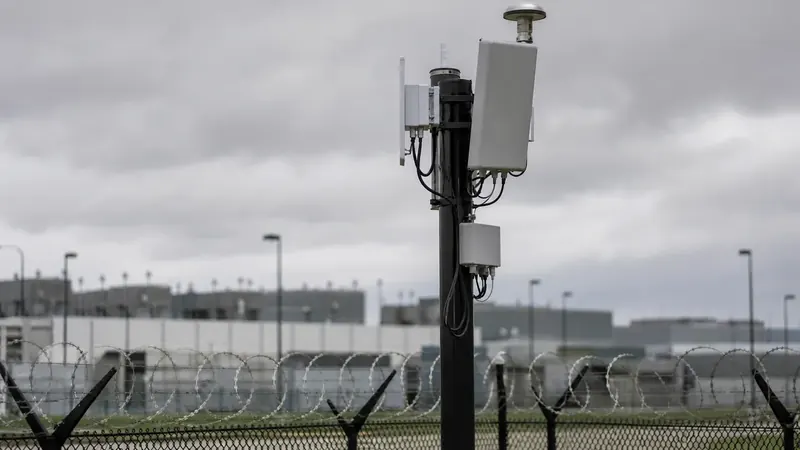
Data centers protected against drones: AI security goes physical
Companies are developing anti-drone protection systems for AI data centres. We look at what this emerging market reveals about the new status of these facilities.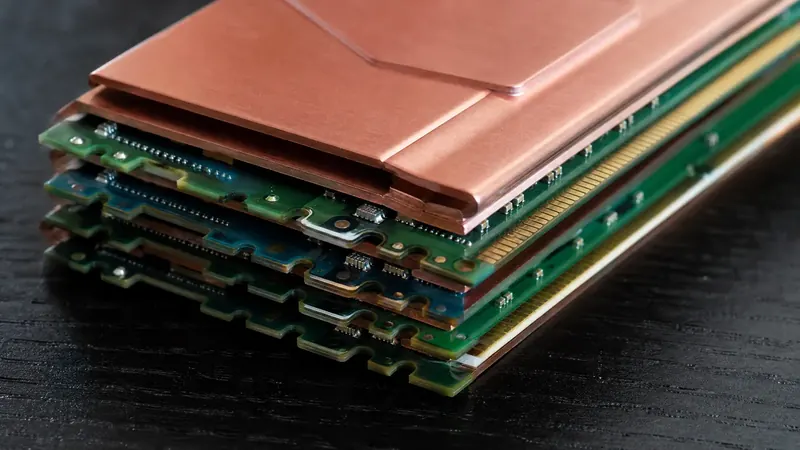
The memory shortage threatening AI, and which is set to push up the price of your next phone
The memory demand from AI data centers is putting strain on the entire market, with knock-on effects on consumer electronics prices. We explain the mechanism and its consequences.
The sovereignty of computing: the real issue no one names
Cambricon posts spectacular growth despite US restrictions, NAVER builds sovereign capacity in South Korea. We analyse what the idea of compute sovereignty really covers, and what it implies for Europe.
Meta releases a 30-billion-parameter agent that runs on a single graphics card.
Meta has released a 30-billion-parameter agentic model designed to run on a single graphics card. We explain why this hardware constraint is more interesting than the race for giant models.
$15 billion data center project blocked by water supply issue
A $15 billion data centre project in India is facing local opposition over water and biodiversity concerns. We examine what this deadlock reveals about the physical limits of the AI infrastructure race.
Training and inference: the two costs of AI that everyone keeps confusing
There's a lot of talk about the cost of training models, but rarely about the cost of their daily use. We explain the difference between training and inference, why the latter now dominates the AI economy, and what that implies.
Data centers in space: brilliant idea or reckless leap forward?
Starcloud has run a GPU in orbit, Google is preparing Project Suncatcher for 2027, and SpaceX has filed for a million computing satellites. We're seriously examining the technical and environmental arguments, including the cooling problem no one mentions.
Why would an AI capable of solving a mathematical conjecture get two numbers wrong when adding them?
AI models excel at advanced mathematics yet sometimes fail at basic arithmetic. Here's why: they don't calculate—they predict text, and numbers are tokenised in a way that makes arithmetic surprisingly difficult.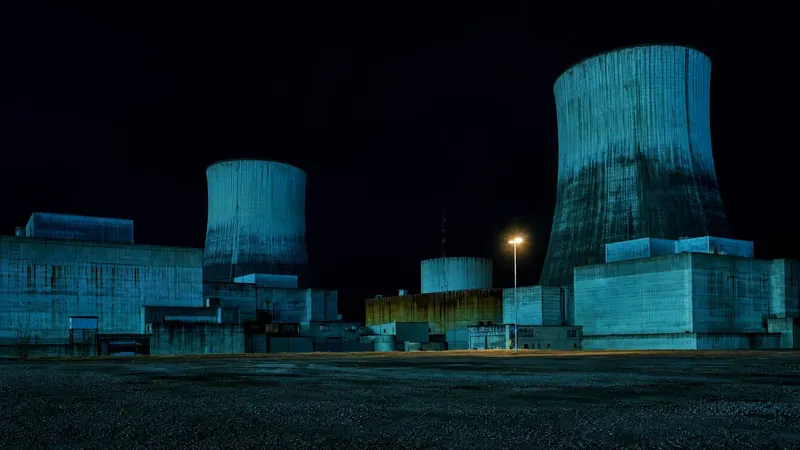
Nvidia is reportedly considering guaranteeing $250 billion for OpenAI: when the seller finances its client
According to the Wall Street Journal, Nvidia is reportedly in talks to secure around $250 billion so that OpenAI can lease a 10-gigawatt data center in Ohio. We break down this circular financing mechanism, why it worries analysts, and what it reveals about the AI economy.
Meta wants to build its own AI chip: the great escape from Nvidia has begun
Meta is reportedly planning to begin manufacturing a chip designed for its own AI needs as early as September 2026, aiming to cut costs and reduce its reliance on Nvidia and AMD. This move fits a broader trend: all the tech giants are building their own in-house silicon. We explain why, and what it changes.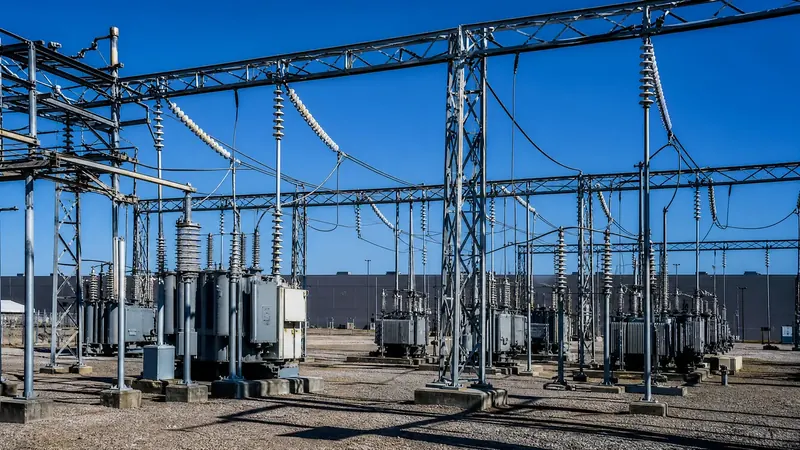
The real raw material of AI isn't data. It's electricity and silicon.
Anthropic has just signed a $19 billion data centre lease, Meta is training a model on nearly a million chips. Behind the apparent immateriality of AI lies a very concrete industrial battle for compute, energy and silicon. We break down this race, its stakes, and why it is redrawing the map of technological power.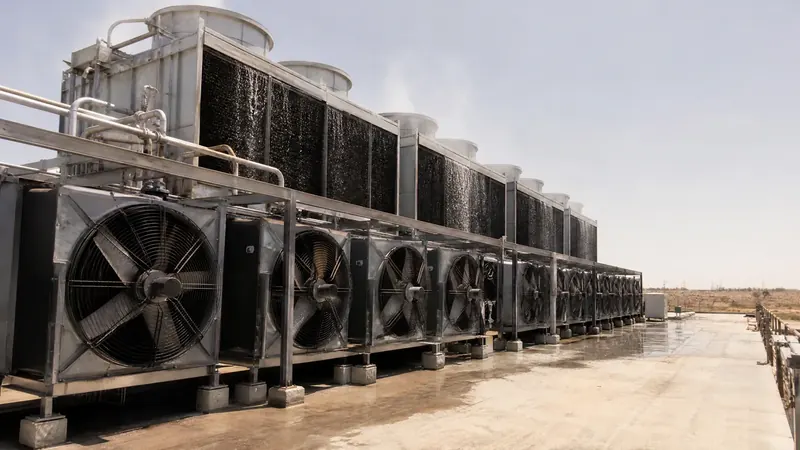
The hidden footprint of AI: how much water and electricity does ChatGPT really consume?
While everyone talks about models and benchmarks, a question is building pressure in local communities and scientific reports: how much water and electricity does AI really consume? The figures, when looked at without complacency, are dizzying. And the bill is starting to be paid by everyone.
The AI War: United States vs China (and Europe?)
In 2026, the technology race between America and China took an unexpected turn. One is betting on technological lock-in, the other on open-source abundance. And meanwhile, Europe is choosing the law.
Other topics in “Themes”
- AI agents77 articles
- Code and developers22 articles
- Images and video20 articles
- Voice and music15 articles
- Robots and self-driving cars9 articles
- Health15 articles
- School and education16 articles
- Jobs and work34 articles
- Laws and regulation59 articles
- Cybersecurity32 articles
- Safety and risks51 articles
- Privacy and data45 articles
- Disinformation and deepfakes34 articles
- Energy and climate15 articles
- Research and science43 articles
- Money and markets53 articles
- AI prices and costs43 articles
- Geopolitics and sovereignty58 articles
- Open source and local AI44 articles
- Culture and creativity42 articles
- Everyday life32 articles
- Philosophy and ethics97 articles
- Understanding AI122 articles
- Benchmarks and comparisons30 articles