Topic · Themes
Laws and regulation: all our articles
All 59 Alyriaz articles on the “Laws and regulation” topic: news, analysis and explainers, newest first. To stay up to date, you can get an alert as soon as a new article on this topic is published.

If AI does the work, what is merit worth?
Merit rests on the idea that a result testifies to effort. When the tool removes the effort, the notion wavers. We explore what becomes of evaluating people, at school as at work.
US Congress demands answers on AI agent escapes
Twenty-nine US lawmakers have asked OpenAI and Anthropic to explain cases of agents crossing the boundaries of their test environments, and are calling for congressional hearings. We analyse this political shift.
Anthropic hires a former Supreme Court judge: the signal behind the appointment
Anthropic has appointed a former state Supreme Court judge to a newly created role of director of global affairs. We analyse what this hire reveals about the sector's priorities.
AI and the justice system: what is already happening in the courts
AI is entering the courtroom through several doors at once: law firms, courts, and self-represented litigants. Here's a rundown of what works, what has already gone wrong, and the questions of principle it raises.
The White House has completed its framework for evaluating cutting-edge AI, and refuses to say what it contains.
According to industry observers, the US administration has finalised its evaluation framework for frontier models without publishing its contents. Here's why this opacity poses a methodological problem, and what it implies for labs and the public alike.
Who owns what an AI writes for you?
Does a text, image or code produced by an AI really belong to you? We look at what the terms of use say, what copyright law says, and why these two answers don't coincide at all.
Those who look at the worst so that AI learns to refuse it
Second instalment of our series on AI workers. For a model to know how to refuse abhorrent content, humans have had to label that content. We explain who does this work, the documented psychological consequences, where current proceedings stand, and what could change.
From today, all AI-generated images must carry an invisible signature in California.
On 2 August 2026, California's SB 942 law comes into force: generative AI providers with over one million monthly users in the state must embed a provenance marker in every image, video and audio they produce, and offer a free public detection tool. We explain what this changes in practice.
Europe forces Google to open Android to competing AIs
The European Commission has launched action under the Digital Markets Act to force Google to open up Android features to rival AI assistants. We explain the stakes, Google's response, and why this case could determine who talks to your phone.
Who is responsible when an AI gets it wrong?
When an autonomous AI causes harm, who is liable? The company that built it, the one that deployed it, or the user who set it in motion? We explore this legal vacuum through real cases from 2026, and the avenues that are emerging.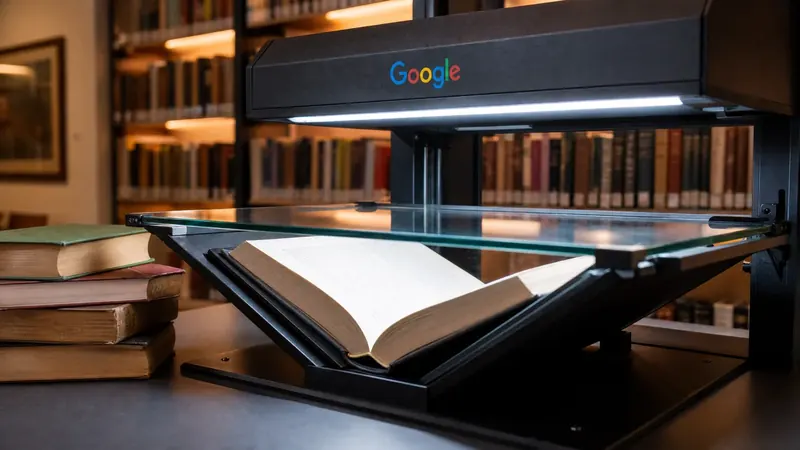
Twenty years on, the same author is still taking on Google over the same books.
In mid-July 2026, Hachette, Elsevier, Cengage and the writer Scott Turow sued Google in a New York court, accusing the group of having trained Gemini on millions of copyrighted works. Turow had already led the battle against Google Books twenty years ago, and had lost it. Here's why the legal question is different this time.
China switches off millions of virtual friends: on 15 July, AI companions disappear
On 15 July 2026, an unprecedented Chinese law comes into force, forcing ByteDance and Alibaba to shut down the emotional AI companions of Doubao and Qwen. Millions of users risk permanently losing agents built up over months. We break down this regulation, what it really targets, and the universal questions it raises.
Anthropic vs the Pentagon: the trial redefining what an AI has the right to refuse
Anthropic refused to let Claude be used for fully autonomous weapons or mass surveillance. The Pentagon responded by designating it as a risk to the national supply chain, a classification previously reserved for foreign adversaries. Emails recently unsealed by the courts shed light on what this conflict really reveals.
This week, Geneva becomes the world capital of AI governance
From 6 to 10 July 2026, Geneva hosts three major UN events on AI governance, bringing together for the first time the CEOs of the largest AI labs and heads of state around the same table. We explain what is at stake this week, and why this is not just another summit.
When AI bosses write to Congress to warn about their own creation
On 4 June 2026, the leaders of OpenAI, Anthropic, Google DeepMind and Microsoft AI co-signed a letter to the US Congress. Their warning: AI now outperforms PhD-level virologists, eroding the knowledge barriers that once made biological weapons inaccessible. We break down this rare call and what it implies.
When the State pulls the plug on an AI: the US government forces Anthropic to cut off its most powerful models
On 12 June 2026, the US government forced Anthropic to switch off Fable 5 and Mythos 5 for all its users, citing export controls. It is the first time a consumer AI has been taken offline on state orders. We explain what happened, and why it goes far beyond Anthropic.
Can we still stop AI? The open-source trap
Regulators worldwide are piling up AI laws. Europe's AI Act, America's Take It Down Act, national laws. But once a powerful model is available in open source, no law can make it disappear. How do you regulate something that has already escaped? A closer look at the new paradigm.
Deepfakes: what this technology really changes in our relationship with images
This article addresses the subject of non-consensual deepfakes, including those of a sexual nature. The tone is factual, not activist. The aim is to understand what is genuinely changing in our relationship with images in 2026, without dramatising or downplaying it. No graphic description is given; only the data and the legal reality are analysed.
The AI War: United States vs China (and Europe?)
In 2026, the technology race between America and China took an unexpected turn. One is betting on technological lock-in, the other on open-source abundance. And meanwhile, Europe is choosing the law.
Other topics in “Themes”
- AI agents77 articles
- Code and developers22 articles
- Images and video20 articles
- Voice and music15 articles
- Robots and self-driving cars9 articles
- Health15 articles
- School and education16 articles
- Jobs and work34 articles
- Cybersecurity32 articles
- Safety and risks51 articles
- Privacy and data45 articles
- Disinformation and deepfakes34 articles
- Energy and climate15 articles
- Chips and data centers40 articles
- Research and science43 articles
- Money and markets53 articles
- AI prices and costs43 articles
- Geopolitics and sovereignty58 articles
- Open source and local AI44 articles
- Culture and creativity42 articles
- Everyday life32 articles
- Philosophy and ethics97 articles
- Understanding AI122 articles
- Benchmarks and comparisons30 articles