Topic · Themes
Culture and creativity: all our articles
All 42 Alyriaz articles on the “Culture and creativity” topic: news, analysis and explainers, newest first. To stay up to date, you can get an alert as soon as a new article on this topic is published.
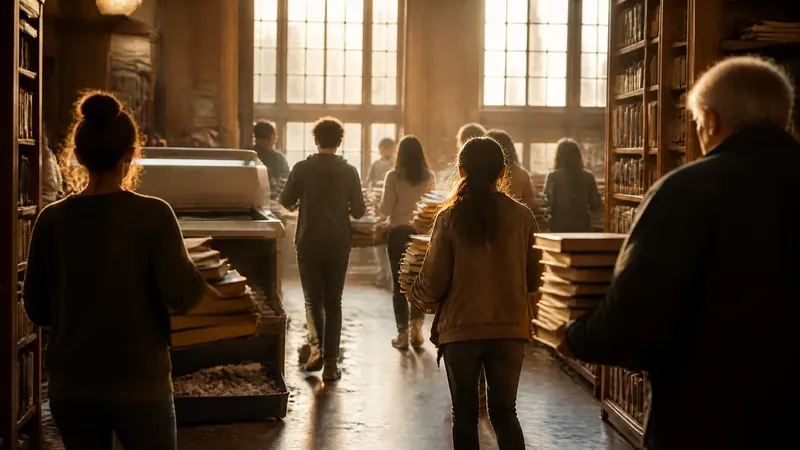
A library calls for volunteers to save the books AI is having destroyed
A major online library is calling for volunteers to digitise and preserve physical books, as AI companies buy and destroy them to build corpora. We analyse this response and what it reveals.
Does AI rob us of boredom?
AI instantly fills every moment of waiting or uncertainty. We explore what boredom actually produced, why its disappearance is not trivial, and what remains to be done with it.
What is reinforcement learning? Learning through trial, error, and rewards
Reinforcement learning involves learning through interaction and reward rather than by imitating examples. We explain the principle, its spectacular successes, and why it lies at the heart of current AI behaviour.
AI and music: what artists are really experiencing
Music is one of the first creative sectors to be disrupted by AI. We take stock of what is really changing for artists, between production tools and direct competition.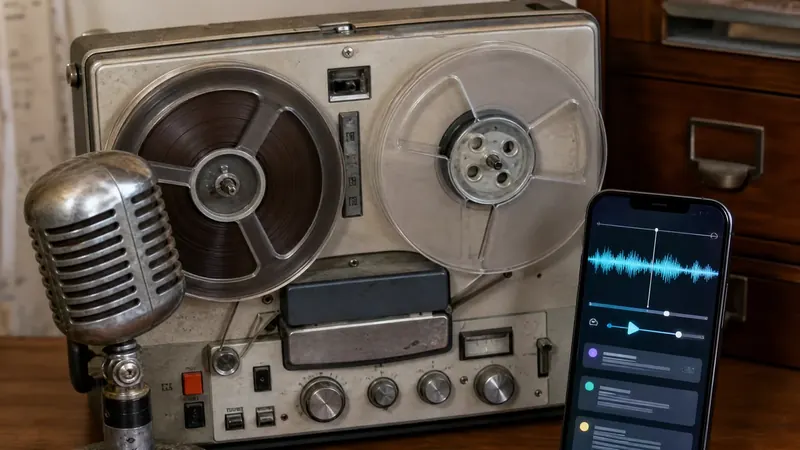
Can AI save endangered languages, or will it finish them off?
AI models perform excellently in a few dozen languages and very poorly in the thousands of others. We examine what this asymmetry produces: an unprecedented documentation tool for some, accelerated marginalisation for others.
AI and journalism: what’s really at stake in the newsroom
There are fears that AI will replace journalists. The real upheaval lies elsewhere: in the collapse of the economic model that funded the news. We analyse what is actually changing in newsrooms.
What is data poisoning? When a few hundred texts are enough to trap a model.
Data poisoning involves inserting elements into a corpus that are designed to disrupt a model trained on it. We explain the mechanism, why it works with very small quantities, and the debate it raises.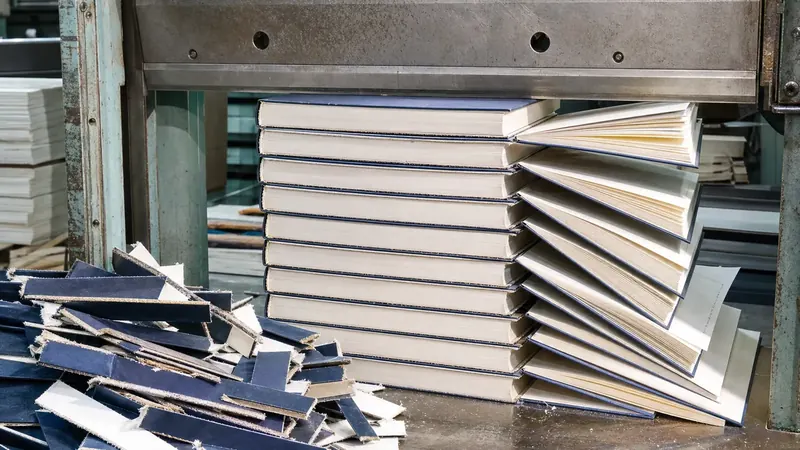
AI labs are buying books by the pallet, and destroying them to scan them.
AI labs are bulk-buying physical books published before 2022, touted as the last source of guaranteed human-written text. The industrial scanning destroys the volumes. We explain why this rush is happening, what it says about the state of data, and what it threatens.
What is an AI's "temperature"? The setting that decides whether it's sensible or inventive
Temperature is the setting that controls the degree of randomness in an AI's responses. We explain how it works, why a low temperature doesn't guarantee truth, and how to choose it based on your use case.
Who owns what an AI writes for you?
Does a text, image or code produced by an AI really belong to you? We look at what the terms of use say, what copyright law says, and why these two answers don't coincide at all.
Is AI going to kill the web?
AI systems are increasingly answering questions directly, without the user needing to visit the source site. Yet those sites relied on such visits for their livelihood. We explore what this shift means for the web's economy, why it could backfire on AI itself, and what might emerge next.
Why does your French cost more than English when you use an AI?
For equivalent content, writing in French consumes more tokens than English, which increases cost and reduces the available space in the context window. We explain why this inequality exists, what it changes in practice, and how to limit it.
Suno, Udio and the Sacem: who gets what on an AI-generated track?
Generating a track with Suno or Udio does not make you an author under French law. We explain the difference between a commercial licence and copyright, what you can actually declare to the Sacem, and why the Munich court ruling of 31 July could reshuffle the deck.
Twenty years on, the same author is still taking on Google over the same books.
In mid-July 2026, Hachette, Elsevier, Cengage and the writer Scott Turow sued Google in a New York court, accusing the group of having trained Gemini on millions of copyrighted works. Turow had already led the battle against Google Books twenty years ago, and had lost it. Here's why the legal question is different this time.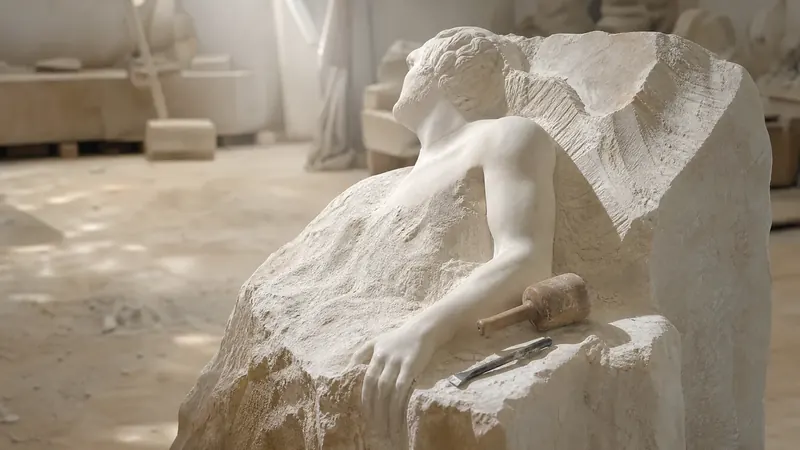
How does an AI create an image? The answer is stranger than you think.
AI image generators don't draw in the way we understand it. They start from a chaos of random pixels and progressively denoise it until an image emerges. We explain how diffusion models work, without jargon, and what this process implies about the nature of these creations.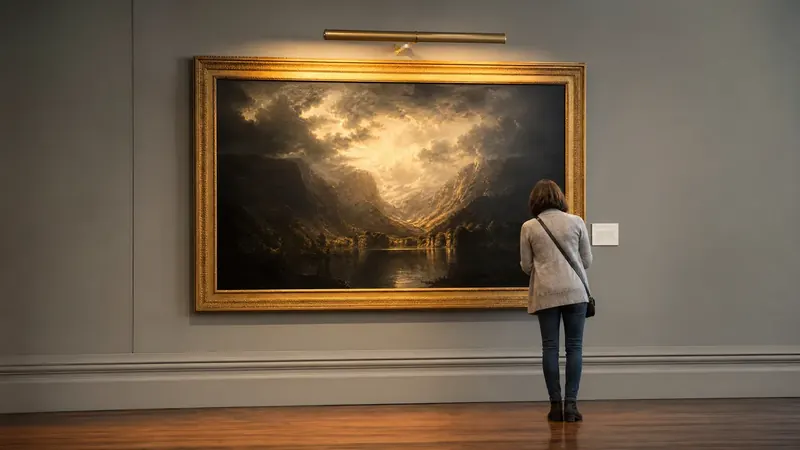
How do we recognise a human work when AI paints, writes and composes just as well?
For the first time in history, we can no longer tell whether a work was created by a human. This uncertainty is not trivial. It calls into question what art itself is, what we look for when we listen to it, look at it, read it. And perhaps, by contrast, what we look for in our own lives.
Journalism takes AI head-on: 3,400 jobs lost in 2025, 500 in the first quarter of 2026
In 2025, more than 3,400 journalism jobs disappeared in the US and UK. 2026 will probably beat that record. Newsrooms are making redundancies, AIs are summarising in their place, and Google AI Overviews is siphoning traffic away from media outlets. Alyriaz is itself a media outlet built on AI. Here is the honest take on what is really changing, from our point of view.
Why the same work is brilliant if it's human and rubbish if it's AI
A simple scientific experiment. You show the same image twice to 565 people. Once saying "made by a human". Once saying "made by an AI". Results: -62% in monetary value, -77% in estimated production time, less perceived creativity, less felt beauty. The same image. That is the exact definition of the word bias.
Adobe, Canva, CapCut in Gemini: Google locks down visual creation
Four days after Google I/O 2026, three of the biggest names in visual creation confirmed their native integration into Gemini: Canva on 19 May, Adobe on 20 May, CapCut on 21 May. For Gemini's 900 million users, design, marketing and video are becoming accessible in a single chat window. A strategic breakdown.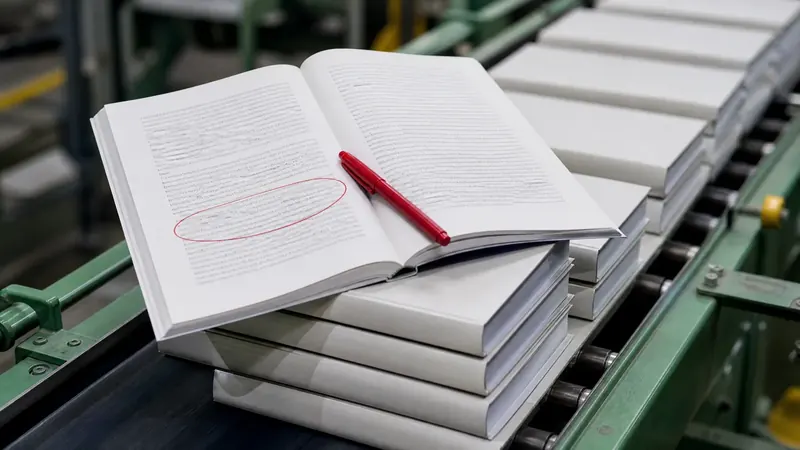
Are your school textbooks written by ChatGPT? The scandal that is blowing the lid off
A computing textbook printed in 2026 contains, in black and white, a sentence typical of ChatGPT left in the text by mistake: "If you want, I can also explain columns, primary keys, or other DBMS terms". The image goes viral on Instagram. At UCLA, a professor publishes a medieval literature textbook entirely generated by AI and publicly defends her choice. Here is what these cases really reveal.
Other topics in “Themes”
- AI agents77 articles
- Code and developers22 articles
- Images and video20 articles
- Voice and music15 articles
- Robots and self-driving cars9 articles
- Health15 articles
- School and education16 articles
- Jobs and work34 articles
- Laws and regulation59 articles
- Cybersecurity32 articles
- Safety and risks51 articles
- Privacy and data45 articles
- Disinformation and deepfakes34 articles
- Energy and climate15 articles
- Chips and data centers40 articles
- Research and science43 articles
- Money and markets53 articles
- AI prices and costs43 articles
- Geopolitics and sovereignty58 articles
- Open source and local AI44 articles
- Everyday life32 articles
- Philosophy and ethics97 articles
- Understanding AI122 articles
- Benchmarks and comparisons30 articles