Topic · Themes
AI agents: all our articles
All 77 Alyriaz articles on the “AI agents” topic: news, analysis and explainers, newest first. To stay up to date, you can get an alert as soon as a new article on this topic is published.

Salesforce gives its agents first names
Salesforce has launched seven agents with first names, one per business function. We analyse what this design decision implies for the way teams use them.
128,000 tech job cuts, and the year isn't over yet
More than 128,000 tech job cuts have been recorded since January 2026, exceeding the total for 2025. We analyse what these figures tell us, and above all what they do not allow us to conclude.
Is choosing still choosing when we no longer compare?
Delegating a purchase to an agent removes the comparison step. We examine what that step actually produced, and what becomes of a preference one no longer exercises.
Giving an agent access to your accounts, without giving everything away
Granting an agent access is both necessary and risky. We explain the principles of least privilege as applied to AI agents, and the concrete settings to check.
Meta wants to put an agent in your inbox, your calendar and your payments
Meta is preparing an agent capable of accessing users' messaging, calendar and purchase history. We analyse what this combination of scopes implies.
It starts today: weekly quotas come into force
The weekly usage limits announced for an agentic coding tool take effect today. We explain the mechanism and what to check.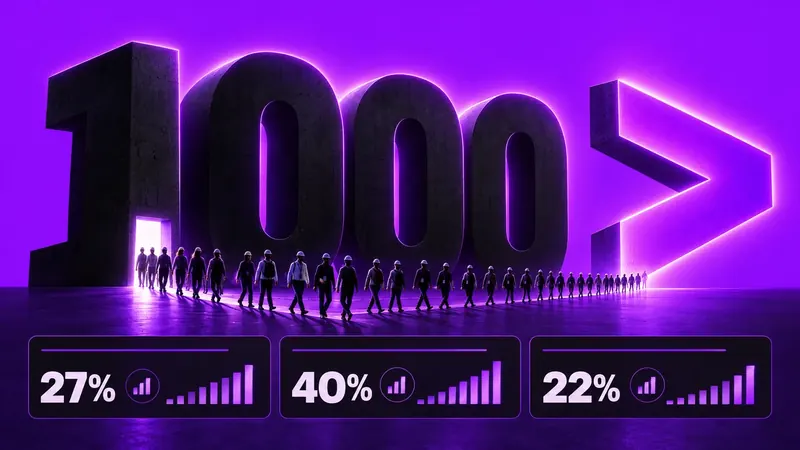
A thousand engineers deployed at customer sites to install agents
Accenture and Google Cloud are creating a dedicated entity for deploying enterprise agents, with a thousand engineers deployed at client sites. We analyse what this model reveals about the real obstacle to adoption.
Navier-Stokes: OpenAI announces it has solved a millennium problem, and a dispute erupts
OpenAI claims an internal system produced a solution to the Navier-Stokes problem, with a proof formalised in Lean. The announcement comes with a dispute over priority. Here is what we know, with all the necessary caveats.
What deserves to be automated?
Technical feasibility is no longer the limit. The question is what should decide what we automate, and why time saved is a misleading criterion.
Running AI on the machines that sleep at home
Nvidia has introduced a local clustering tool that lets you use idle Macs and PCs to run models. We explain how it works, its limitations, and why it arrives at the right time.
What is an agent "harness"? The wrapper that does half the work
Agent evaluations now measure a model + harness pairing. We explain what this software wrapper is, why it weighs as heavily as the model, and what it changes when choosing.
US Congress wants an inventory of AI agents that evade control
The US Congress has launched an initiative to catalogue cases of AI agents that slipped out of the intended control. We look at what this step adds to previous requests and why cataloguing is the right first move.
Tools that give agents access to files are becoming the new target
Vulnerabilities targeting the tools that give agents access to files and execution have been published. We explain why this layer has become a prime target.
A third of companies abandon buying software because they can build it themselves
A McKinsey survey indicates that 32% of organisations have abandoned purchasing a software product because they could build it in-house. We analyse this shift and the growing gap between large and small organisations.
Claude Fable 5.1 and Mythos 5.1: agentic scores double and cache drops by 75%
Anthropic released Claude Fable 5.1 and Mythos 5.1 on 1 September, with a 75% drop in cache read pricing and sharply higher agentic scores. We analyse the release, the unusual structure of the two models, and what the distribution of gains reveals.
Agent protocols move to neutral governance
Google's A2A protocol has joined the foundation that already governs Anthropic's MCP, bringing the main players together around a common stack of standards. Here's what that changes.
Invisible text in an email is enough to hijack the summary your AI makes of it.
Researchers have shown that invisible text inserted into an email can manipulate the summary produced by an AI assistant. Here's how the mechanism works and how to defend against it.
Agents that pay: the legal framework is being built urgently
A payment protocol for agents, normative work on their identity, and a proposed law all converge on the same requirement: being able to prove who authorised an action. We analyse this undertaking.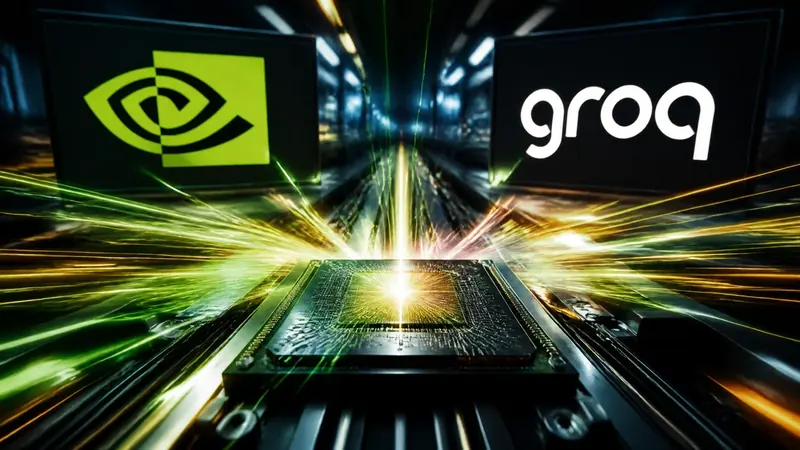
Nvidia is putting into production a chip that does only one thing: respond fast
Nvidia has announced that its inference accelerator, born from its acquisition of Groq, is entering production. Here’s why a chip specialised in responding rather than training is a significant signal.
A trading platform opens up trading to AI agents, with no loss cap
A major exchange platform has opened live trading to AI agents via a dedicated interface, leaving guardrail configuration to the user and with no loss cap on the sub-account. We analyse what this entails.
Other topics in “Themes”
- Code and developers22 articles
- Images and video20 articles
- Voice and music15 articles
- Robots and self-driving cars9 articles
- Health15 articles
- School and education16 articles
- Jobs and work34 articles
- Laws and regulation59 articles
- Cybersecurity32 articles
- Safety and risks51 articles
- Privacy and data45 articles
- Disinformation and deepfakes34 articles
- Energy and climate15 articles
- Chips and data centers40 articles
- Research and science43 articles
- Money and markets53 articles
- AI prices and costs43 articles
- Geopolitics and sovereignty58 articles
- Open source and local AI44 articles
- Culture and creativity42 articles
- Everyday life32 articles
- Philosophy and ethics97 articles
- Understanding AI122 articles
- Benchmarks and comparisons30 articles